Crystal Healing for Anxiety
A Practical Guide - Finding Peace, One Stone at a Time
Before You Begin
A Practical Guide - Finding Peace, One Stone at a Time
Finding Peace, One Stone at a Time
Dedication
To everyone who has ever felt their heart race for no apparent reason, who has lain awake at 3 AM with thoughts they couldn't quiet, who has canceled plans because the world felt too heavy — this book is for you. You are not broken. You are not alone. And there is hope.
Important Disclaimer
Please read this carefully before proceeding.
This book is intended as a complementary wellness guide and is not a substitute for professional medical advice, diagnosis, or treatment. Crystal healing is considered an alternative therapy and should be approached as a supportive practice alongside, not in place of, conventional mental health care.
If you are experiencing severe anxiety, panic attacks, depression, or any mental health crisis, please seek help from a qualified healthcare provider immediately. The following resources are available:
- National Suicide Prevention Lifeline (US): 988 or 1-800-273-8255
- Crisis Text Line: Text HOME to 741741
- International Association for Suicide Prevention: Find resources at www.iasp.info
- Emergency Services: Call your local emergency number
Crystal healing works best when viewed as a tool for mindfulness, self-care, and emotional grounding — a gentle companion on your wellness journey, not a cure. Always consult with your doctor or mental health professional before making changes to your treatment plan.
The stories shared in this book are composites based on common experiences and have been anonymized to protect privacy.
Preface
I remember the first time I held a piece of amethyst in my palm. It was a Tuesday afternoon, and my anxiety had been humming beneath my skin all day like an electrical current I couldn't unplug. A friend placed the cool, purple stone in my hand and said simply, "Hold this. Breathe."
I was skeptical. I was desperate. I was willing to try anything that didn't involve another prescription or another list of side effects to manage.
That small stone didn't cure my anxiety. Let's be clear about that from the start. But it did something equally valuable — it gave my hands something to do, my mind something to focus on, and my breath something to follow. It became an anchor, a tangible reminder that I was safe in that moment, that the storm in my chest would eventually pass.
This book was born from that experience and from the countless conversations I've had with others walking similar paths. Over the years, I've spoken with hundreds of people who have turned to crystals not because they reject modern medicine, but because they long for something more — something they can hold, something that feels personal, something that reconnects them with their own capacity for calm.
What This Book Is:
- A practical guide to using crystals as part of your anxiety management toolkit
- A gentle introduction to mindfulness practices paired with tangible objects
- A warm, judgment-free companion for your wellness journey
- A collection of actionable techniques you can start using today
What This Book Is Not:
- A medical manual or diagnostic tool
- A replacement for therapy, medication, or professional care
- A guarantee of cures or instant results
- A judgment on whatever methods you're currently using
Crystal healing sits at the intersection of ancient wisdom and modern mindfulness. Whether you believe crystals carry vibrational energies or simply appreciate them as beautiful objects that help you slow down and breathe, the practices in this book can support your emotional well-being.
The approach in these pages is intentionally inclusive. You don't need to believe in energy healing to benefit from holding a cool stone and taking ten deep breaths. You don't need to meditate for hours to feel the grounding weight of a crystal bracelet on your wrist. You only need an open mind and a willingness to show up for yourself.
Throughout this book, you'll find:
- Step-by-step techniques you can practice immediately
- Crystal profiles highlighting specific stones known for their calming properties
- Real-world scenarios showing how to integrate crystals into daily life
- Mindfulness practices enhanced by physical touchstones
- Gentle reminders to seek professional support when needed
The journey through anxiety is deeply personal. What works for one person may not work for another. Consider this book a buffet of options — try what resonates, leave what doesn't, and trust yourself to build a practice that feels right for you.
You are stronger than your anxiety. You are more resilient than you know. And you deserve every tool, every technique, and every bit of support that helps you feel at peace in your own skin.
Let's begin.
Understanding Anxiety
What Anxiety Really Is
If you're reading this, you probably already know what anxiety feels like. It's the 3 AM ceiling-staring. The racing heart before a meeting you know you're prepared for. The inexplicable dread that settles over you on an otherwise beautiful Sunday afternoon. The feeling that something terrible is about to happen, even when everything around you is perfectly fine.
But let's take a step back and look at what anxiety actually is — not just how it feels, but what's happening in your body and mind when it shows up.
Anxiety is, at its core, your body's alarm system. Picture yourself as a caveperson thousands of years ago. You're walking through a forest, and suddenly you hear a rustle in the bushes. Your heart starts racing, your breathing quickens, your muscles tense. Your body is flooding with adrenaline and cortisol, preparing you to either fight the threat or run from it. This is the famous "fight or flight" response, and it's one of the most elegant survival mechanisms nature ever invented.
The problem? For many of us, that alarm system is stuck in the "on" position. It's like having a smoke detector that goes off not just when there's a fire, but when you're making toast, lighting a candle, or even just thinking about something hot. Your body is trying to protect you, but it's working overtime, and the constant alarms are exhausting.
Anxiety exists on a spectrum. On one end, there's the healthy, functional anxiety that motivates you to study for an exam, prepare for a presentation, or look both ways before crossing the street. On the other end, there's debilitating anxiety that makes it hard to leave the house, maintain relationships, or enjoy life. Most people reading this book fall somewhere in between — functional enough to get through the day, but tired of feeling like they're constantly managing an internal storm.
Common Types of Anxiety
Understanding what type of anxiety you experience can help you choose the right crystals and practices. Here are the most common forms:
Generalized Anxiety Disorder (GAD)
This is the persistent, free-floating anxiety that doesn't seem attached to any specific threat. If you have GAD, you might worry about everything — your health, your job, your relationships, your future — often without a clear reason. It's like your brain's worry dial is turned up to 7 and the knob is broken. The constant mental chatter can leave you physically exhausted and emotionally drained.
Social Anxiety
This goes beyond simple shyness. Social anxiety is an intense fear of being judged, embarrassed, or scrutinized by others. It can make everyday interactions — talking to a cashier, attending a party, speaking up in a meeting — feel monumental. People with social anxiety often replay conversations in their heads for hours afterward, analyzing every word for signs that they said something wrong.
Panic Disorder
Panic attacks are sudden waves of intense fear that come on quickly and peak within minutes. They can include heart palpitations, sweating, trembling, shortness of breath, chest pain, nausea, dizziness, and a terrifying fear of losing control or dying. What's especially cruel about panic disorder is that the fear of having another panic attack can become its own source of anxiety, creating a cycle that's hard to break.
Specific Phobias
These are intense fears of specific objects or situations — flying, heights, spiders, needles, enclosed spaces. The fear is disproportionate to the actual danger, and people with phobias often go to great lengths to avoid what they fear, sometimes restructuring their entire lives around avoidance.
Separation Anxiety
While often associated with children, adults can experience separation anxiety too. This involves excessive fear about being separated from attachment figures or loved ones, worrying that something terrible will happen to them when you're apart.
Adjustment Disorder with Anxiety
This type of anxiety develops in response to a specific life change or stressor — a new job, a move, a breakup, a health diagnosis. The anxiety is directly linked to the situation and often improves as you adjust, but in the meantime, it can feel overwhelming.
You might recognize yourself in one of these descriptions, or you might find that your experience blends elements from several. However your anxiety manifests, please know this: it is real, it is valid, and you deserve support.
Anxiety in Modern Life
We don't talk enough about how uniquely stressful modern life is. Our ancestors had plenty of threats, but they were mostly physical and immediate — a predator, a rival tribe, a harsh winter. Once the danger passed, their nervous systems had a chance to return to baseline.
Today's threats are different. They're constant, invisible, and often impossible to resolve completely:
- Information Overload: We consume more information in a day than a medieval person encountered in a lifetime. News alerts, social media updates, emails, notifications — our brains weren't designed to process this volume of input.
- Social Comparison: Social media has turned life into a highlight reel competition. We're constantly exposed to other people's successes, adventures, and seemingly perfect lives, which can make our own struggles feel magnified.
- Economic Pressure: Financial instability, student debt, housing costs, and job insecurity create a low-grade chronic stress that wears down even the most resilient nervous system.
- Disconnection: Despite being more "connected" than ever through technology, many people feel profoundly lonely. Genuine human connection — the kind that soothes anxiety — requires presence, vulnerability, and time, all of which are in short supply in our busy lives.
- Uncertainty: The pace of change in our world is unprecedented. Jobs become obsolete, relationships start and end through apps, and global events remind us daily how little control we actually have.
No wonder anxiety rates are climbing. Your nervous system is doing its best to protect you from threats that your brain interprets as immediate and real, even when they're abstract and ongoing.
Why People Seek Natural Approaches
There's no shame in seeking help for anxiety through conventional means — therapy, medication, lifestyle changes. These tools save lives and restore functioning for millions of people. If they work for you, wonderful. Keep using them.
But many people find themselves wanting something more, or something different:
They want agency. There's something empowering about having tools you can reach for in the moment — something tangible, personal, and under your control.
They want a gentler approach. Some people experience side effects from anxiety medications or simply prefer to start with the least invasive interventions.
They crave ritual. Modern life often lacks the rituals and ceremonies that once helped humans mark transitions, process emotions, and find meaning. Natural practices can restore a sense of sacredness to daily self-care.
They want to feel connected. Working with crystals, plants, and other natural elements can restore a sense of connection to the earth and to something larger than oneself. This sense of belonging is deeply calming to the human spirit.
They're curious. Some people are simply drawn to explore alternative approaches, either as a complement to conventional care or as a starting point for their wellness journey.
Whatever brings you to this book, know that seeking help in whatever form feels right to you is an act of courage. You are not giving up. You are not being unrealistic. You are actively trying to feel better, and that matters.
How This Book Approaches Anxiety
The philosophy underlying this book is integrative and compassionate. We believe that anxiety is best addressed through multiple pathways:
- Professional support when needed — therapy, counseling, medical care
- Lifestyle foundations — sleep, movement, nutrition, connection
- Mindfulness practices — meditation, breathing, present-moment awareness
- Tangible tools — crystals, aromatherapy, tactile grounding objects
- Self-compassion — learning to treat yourself with the kindness you'd offer a dear friend
Crystals fit into categories 3, 4, and 5. They're physical objects that can anchor your attention in the present moment. They're beautiful reminders to slow down and breathe. They're companions on a journey toward greater self-awareness and emotional regulation.
In the chapters ahead, you'll learn not just which crystals to use, but how to use them in ways that support your nervous system and quiet your mind. You'll discover that the power of crystal healing lies not just in the stones themselves, but in the intention, attention, and care you bring to working with them.
Take your time with this book. There's no rush. Anxiety has a way of making everything feel urgent, but healing is not a race. Read a chapter, try a technique, notice how you feel. Trust the process, and trust yourself.
How Crystals Can Help with Anxiety
Beyond the Skepticism
Let's address the elephant in the room: crystals cannot cure anxiety. They won't rewire your brain chemistry, erase your traumatic memories, or eliminate the stressors in your life. If you're looking for a magic cure, this book will disappoint you.
But if you're looking for gentle, supportive tools that can help you feel calmer, more grounded, and more connected to your own inner resources — keep reading. Because while crystals may not cure anxiety, they can absolutely help you manage it, and for many people, that's more than enough.
The key is understanding how crystals help. The mechanisms are more practical than mystical, and they're backed by principles that even the most skeptical mind can appreciate.
The Psychology of Touch and Tangibility
Human beings are tactile creatures. From the moment we're born, touch is one of our primary ways of experiencing the world and finding comfort. A baby calms when held. A stressed person lowers their blood pressure when they pet a dog. A hug from a loved one can literally change your body chemistry.
Crystals give your hands something to do when anxiety strikes. This is more powerful than it sounds. When anxiety hits, many people experience restless energy — fidgeting, nail-biting, pacing, hair-pulling. Having a smooth stone to hold, rub, or roll between your palms provides a healthy outlet for that energy.
The cool, solid weight of a crystal in your hand can also serve as an anchor to the present moment. Anxiety lives in the future — in the "what ifs" and the catastrophic predictions. A physical object brings you back to now, to the reality that in this exact moment, you are safe.
There's also something deeply comforting about the permanence of stones. Your anxiety comes and goes. Your thoughts swirl and change. Your emotions rise and fall. But a crystal is stable, solid, unchanging. Holding something that endures can remind you that you, too, can endure.
The Role of Intention and Ritual
One of the most powerful aspects of crystal work is the act of setting an intention. When you choose a crystal to help with anxiety, you're not just picking up a rock — you're making a conscious decision to prioritize your emotional well-being. That decision itself is therapeutic.
Rituals, even simple ones, have been shown to reduce anxiety by providing predictability, structure, and a sense of control. When you cleanse your crystal, hold it while you breathe, or place it under your pillow before sleep, you're creating a small ceremony around your self-care. These rituals signal to your brain that it's time to shift gears, to move from vigilance to relaxation.
The psychologist Dr. Sian Beilock has studied how ritualized behavior can reduce anxiety by providing a sense of order and predictability in an uncertain world. Her research suggests that rituals work not because of any magical property, but because they give the brain a sense of control and structure, which directly counteracts the feeling of helplessness that anxiety creates.
When you work with crystals, you're essentially creating a personalized ritual toolkit. Each time you reach for your amethyst or adjust your crystal bracelet, you're engaging in a small act of self-regulation.
Mindfulness Made Tangible
Mindfulness — the practice of paying attention to the present moment without judgment — is one of the most well-researched interventions for anxiety. Study after study has shown that regular mindfulness practice can reduce anxiety symptoms, change brain structure, and improve emotional regulation.
But here's the challenge: mindfulness can be hard to learn. For someone whose mind is constantly racing, the instruction to "just sit and observe your thoughts" can feel impossible, even frustrating. Many people try meditation, find they can't quiet their mind, and conclude that they're "bad at it."
Crystals make mindfulness tangible. They give you something to focus on — the coolness of the stone, the smoothness of its surface, the weight of it in your hand. They turn an abstract practice into a sensory experience, which can be much easier for anxious minds to engage with.
When you hold a crystal and focus on its physical properties — its temperature, its texture, its shape — you're practicing mindfulness. You're training your attention to rest on something concrete rather than chasing anxious thoughts. For many people, this is a more accessible entry point to mindfulness than traditional sitting meditation.
The Placebo Effect and Why It Matters
Some people dismiss crystal healing as "just placebo." But let's talk about why that's actually a compelling argument for using crystals, not against them.
The placebo effect is real, powerful, and well-documented. When someone believes a treatment will help them, that belief alone can trigger measurable changes in their body and brain. Placebos can reduce pain, lower blood pressure, improve mood, and even change brain chemistry. They're not imaginary — they're a demonstration of the mind's power to influence the body.
If holding a crystal while you practice deep breathing helps you feel calmer, does it really matter whether the effect comes from the crystal's molecular structure or from your belief in its soothing properties? Either way, you're feeling better. Either way, you're engaging in self-care. Either way, you're taking a moment to pause and breathe, which is something most anxious people don't do often enough.
Rather than worrying about whether crystals are "real," consider whether they're helpful. That's the only metric that matters.
What the Research Says
Let's be honest: there are no large-scale clinical trials proving that crystals cure anxiety. The scientific community has not invested heavily in studying crystal healing, partly because crystals are difficult to test in controlled conditions (it's hard to create a convincing placebo crystal).
However, there is substantial research on related practices that supports the approach in this book:
- Tactile grounding: Studies on grounding techniques show that physical touch and sensory awareness can reduce acute anxiety and prevent dissociation.
- Mindfulness-based stress reduction (MBSR): Decades of research support mindfulness as an effective intervention for anxiety disorders.
- Object-focused meditation: Research on practices like mala beads, worry stones, and prayer beads shows that tactile meditation aids can improve focus and reduce anxiety during practice.
- Ritual and routine: Behavioral research consistently shows that structured self-care rituals reduce anxiety by providing predictability and a sense of agency.
In other words, while crystals themselves may not have been rigorously studied, the practices associated with crystal healing are well-supported by scientific evidence.
A Balanced Perspective
The most important thing to understand about crystal healing for anxiety is that it's not an either/or proposition. You don't have to choose between crystals and therapy, between mindfulness and medication, between natural approaches and conventional care. These tools can work together, complementing each other to create a comprehensive support system.
Think of your anxiety management toolkit as a dinner plate. Therapy and, if needed, medication are the main course — the substantial, evidence-based foundation. Crystals and mindfulness practices are the vegetables and the seasoning — they add nourishment, flavor, and variety to the meal. You can eat the main course alone, but the whole plate is more satisfying and more sustaining.
In the chapters ahead, we'll explore specific crystals and techniques for anxiety relief. Approach them with an open mind and a gentle heart. You don't have to believe anything you don't want to believe. You only have to be willing to try, to notice, and to care for yourself along the way.
Best Crystals for Anxiety
A Practical Guide to Your Crystal Allies
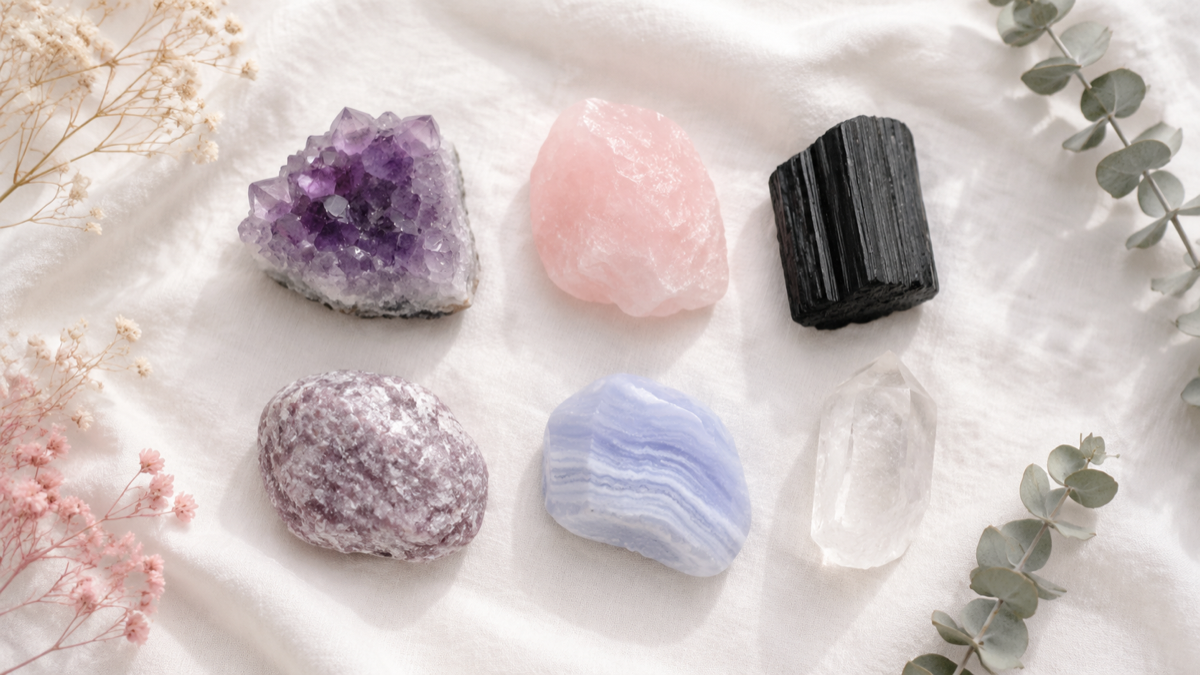
This chapter is the heart of the book. Here, you'll meet six powerful allies in your journey toward calm. Each crystal profile includes what the stone is known for, why it may help with anxiety, practical techniques for working with it, and real-world guidance on when and how to use it.
Remember: you don't need all of these crystals to benefit from this work. Start with one or two that call to you. Let your intuition guide you, but also consider the specific properties of each stone and how they align with your particular type of anxiety.
Amethyst: The Stone of Serenity
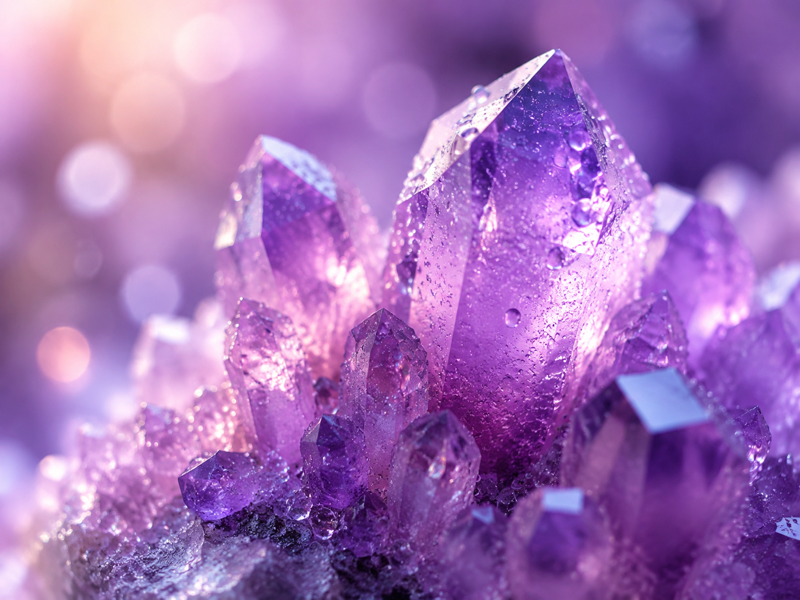
What It Looks Like
Amethyst is instantly recognizable by its stunning purple color, which ranges from pale lilac to deep violet. It's a type of quartz, which means it has a glassy luster and a hexagonal crystal structure. High-quality amethyst is translucent to transparent, and when held to the light, it seems to glow from within. Even lower-grade specimens, which may appear more opaque, carry that distinctive purple hue that has captivated humans for thousands of years.
Why It Helps with Anxiety
Amethyst has been associated with calm and spiritual protection for millennia. Ancient Greeks believed it prevented drunkenness (the name comes from the Greek amethystos, meaning "not intoxicated"), and many cultures have used it as a talisman for mental clarity and emotional balance.
From a practical standpoint, amethyst is excellent for anxiety because:
- It promotes mental clarity. Anxiety often involves racing, confused thoughts. Amethyst is associated with cutting through mental fog and creating space between you and your worries.
- It supports sleep. Many people with anxiety struggle with insomnia. Placing amethyst under your pillow or on your nightstand can become part of a calming bedtime ritual.
- It connects to the crown chakra. In energy healing traditions, amethyst is linked to the crown of the head, associated with higher consciousness and spiritual peace. Even if you don't work with chakras, the symbolism of "rising above" your anxiety can be psychologically powerful.
- It's widely available and affordable. Unlike some rare crystals, good quality amethyst is easy to find in various forms — raw clusters, polished stones, jewelry, and carved shapes.
How to Use Amethyst for Anxiety
For Racing Thoughts:
Hold a piece of amethyst in your dominant hand. Close your eyes and take ten slow breaths, focusing on the cool weight of the stone. Imagine the purple color absorbing your anxious thoughts, transforming them into calm clarity. This practice works well at your desk, in a parked car, or anywhere you need a quick reset.
For Sleep Support:
Place a cleansed amethyst under your pillow or on your nightstand. Before you turn out the light, hold it in both hands and say silently or aloud: "I release today's worries. I welcome rest." Let the stone become a physical reminder that night is for sleeping, not problem-solving.
For Meditation:
Sit comfortably and place an amethyst on your third eye (the space between your eyebrows) while lying down. This is especially soothing for headaches or tension that accompany anxiety. The gentle pressure combined with the stone's coolness can be instantly calming.
Daily Wear:
Amethyst jewelry — rings, necklaces, or bracelets — keeps the stone's energy close throughout the day. Touch it whenever you need a reminder to breathe.
When to Reach for Amethyst
- When your mind won't stop racing
- Before bed when you're feeling keyed up
- During meditation or prayer
- When you need mental clarity
- During stressful meetings or difficult conversations
Rose Quartz: The Stone of Gentle Love
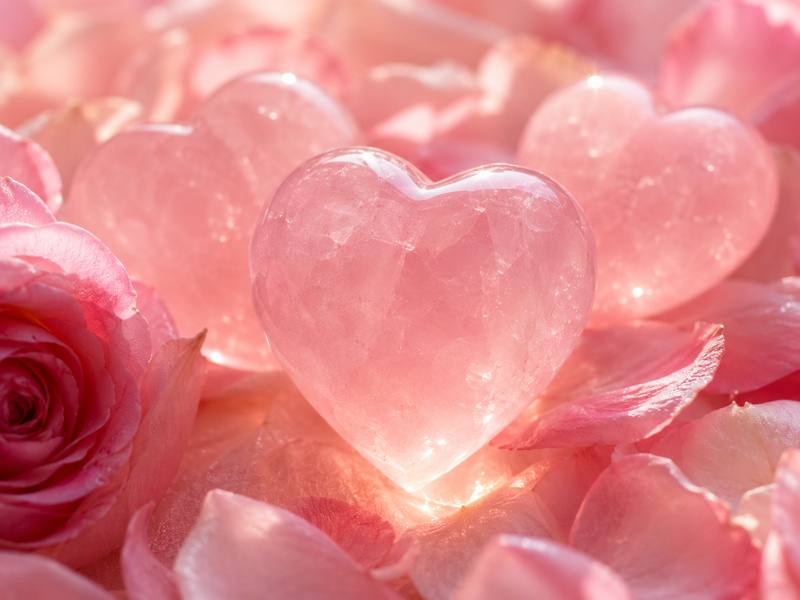
What It Looks Like
Rose quartz is a soft pink stone that ranges from nearly white to a deeper rose color. It has a milky, translucent quality that gives it a gentle, nurturing appearance. Unlike the sharp points of clear quartz, rose quartz often forms in massive, rounded shapes with a soft, almost waxy feel when polished. Its color comes from trace amounts of titanium, iron, or manganese within the crystal structure.
Why It Helps with Anxiety
Anxiety and self-criticism often go hand in hand. Many anxious people have a harsh inner critic — that voice that says you're not good enough, that you've messed everything up, that everyone is judging you. Rose quartz is the antidote to that voice. It's known as the stone of unconditional love, and its primary gift is teaching you to direct that love inward.
Rose quartz helps with anxiety because:
- It softens self-judgment. When you're in an anxious spiral, rose quartz can serve as a reminder to treat yourself with the same compassion you'd offer a dear friend.
- It opens the heart. Anxiety often causes us to contract — physically, emotionally, energetically. Rose quartz encourages a gentle opening, a softening of the protective walls that anxiety builds.
- It soothes emotional wounds. Many anxious people carry old hurts — rejection, abandonment, failure. Rose quartz is associated with healing these deeper emotional patterns.
- It promotes peace in relationships. Relationship stress is a major anxiety trigger for many people. Rose quartz is believed to foster understanding, forgiveness, and harmony in interpersonal dynamics.
How to Use Rose Quartz for Anxiety
For Self-Compassion Practice:
When you notice your inner critic getting loud, hold a piece of rose quartz over your heart. Place your other hand on top of it. Take five deep breaths and repeat: "May I be kind to myself. May I accept myself as I am. May I find peace." This practice, adapted from Loving-Kindness meditation, becomes more powerful with the tactile anchor of the stone.
For Emotional Soothing:
Create a "comfort ritual" with rose quartz. When anxiety makes you feel raw or overwhelmed, draw a warm bath and place rose quartz stones around the tub (away from the drain!). Add Epsom salts and a few drops of lavender essential oil. Let the warmth of the water and the gentle presence of the stones wrap you in comfort.
For Heart-Centered Meditation:
Lie down and place a rose quartz on your heart center (the middle of your chest). Breathe slowly and imagine a soft pink light radiating from the stone, filling your chest with warmth and compassion. This is particularly effective when anxiety manifests as tightness or pain in the chest.
For Daily Reminders:
Wear a rose quartz bracelet or pendant as a constant reminder to be gentle with yourself. Each time you touch it, let it cue a moment of self-kindness.
When to Reach for Rose Quartz
- When your inner critic is being especially loud
- After a difficult social interaction
- When you're feeling lonely or disconnected
- During self-care rituals
- When anxiety manifests as tightness in the chest
- When you need to forgive yourself or others
Black Tourmaline: The Protective Shield
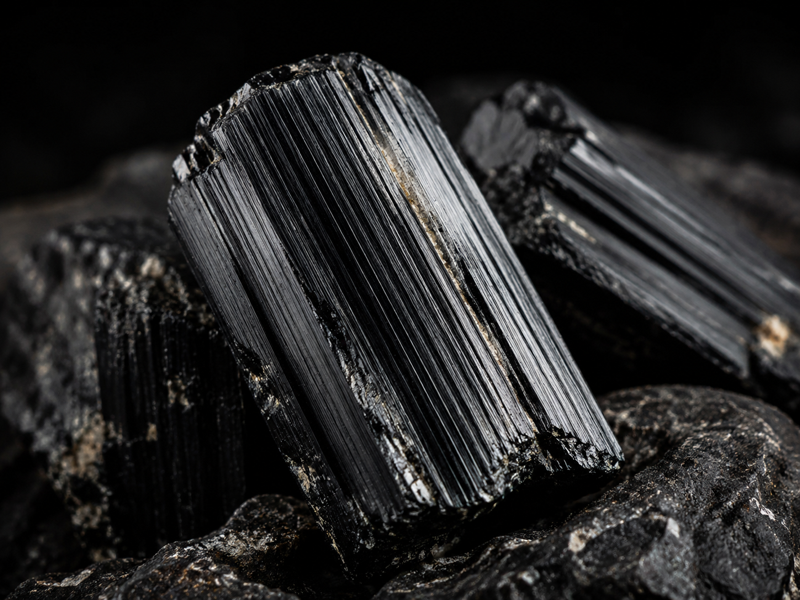
What It Looks Like
Black tourmaline (also known as schorl) is a striking black stone with a distinctive striated texture — fine vertical lines that run along its length. It's opaque, often with a glassy or slightly resinous luster, and when raw, it forms in long, column-like crystals that look almost like black pencils. Polished black tourmaline is smooth and velvety to the touch, with a solid, grounding weight that feels reassuring in the hand.
Why It Helps with Anxiety
Some anxiety comes from within — our thoughts, our worries, our memories. But some anxiety comes from without — the energy of a stressful workplace, the tension in a crowded room, the emotional demands of difficult people. Black tourmaline is renowned for its protective qualities, making it ideal for anxiety that's triggered or amplified by external environments.
Black tourmaline helps with anxiety because:
- It creates energetic boundaries. If you're someone who "absorbs" other people's stress or feels drained by crowds, black tourmaline can serve as a symbolic shield between you and the outside world.
- It grounds scattered energy. Anxiety often feels like being untethered — your energy is flying in all directions. Black tourmaline is deeply connected to the earth element and can help you feel rooted and stable.
- It transmutes negative energy. In crystal lore, black tourmaline doesn't just block negativity; it transforms it into positive energy. Whether or not you believe in energy transformation, the psychological shift from "I'm vulnerable" to "I'm protected" can be powerful.
- It provides a sense of safety. For many anxious people, the world feels unsafe. Carrying black tourmaline can become a personal security ritual, a way of saying "I am safe" to your nervous system.
How to Use Black Tourmaline for Anxiety
For Energetic Protection:
Before entering a stressful environment (a difficult meeting, a crowded event, a tense family gathering), hold a piece of black tourmaline in both hands. Visualize a protective bubble forming around you — dark, strong, and impenetrable. Carry the stone in your pocket or bag throughout the event. Touch it whenever you feel external stress pressing in.
For Grounding:
When anxiety makes you feel scattered or dissociated, stand barefoot on the earth if possible (grass, soil, or sand are ideal). Hold a piece of black tourmaline in each hand. Feel the weight of the stones connecting you to the ground beneath you. Breathe deeply for two minutes, feeling your energy settle and stabilize.
For Workplace Protection:
Place a piece of black tourmaline on your desk between you and the door or any stressful energy source (a difficult coworker's desk, a busy hallway). Let it serve as a physical and symbolic boundary. You can also place one near your computer to mitigate the stress of constant digital input.
For Travel Anxiety:
Keep black tourmaline in your car, your carry-on bag, or your pocket while traveling. Airports, public transit, and unfamiliar places can be overwhelming for anxious people. The stone becomes a familiar anchor in unfamiliar territory.
When to Reach for Black Tourmaline
- Before entering stressful environments
- When you feel overwhelmed by other people's energy
- When traveling or in unfamiliar places
- When you feel scattered or ungrounded
- When anxiety is triggered by external circumstances
- When you need to set emotional boundaries
Lepidolite: The Stone of Peace
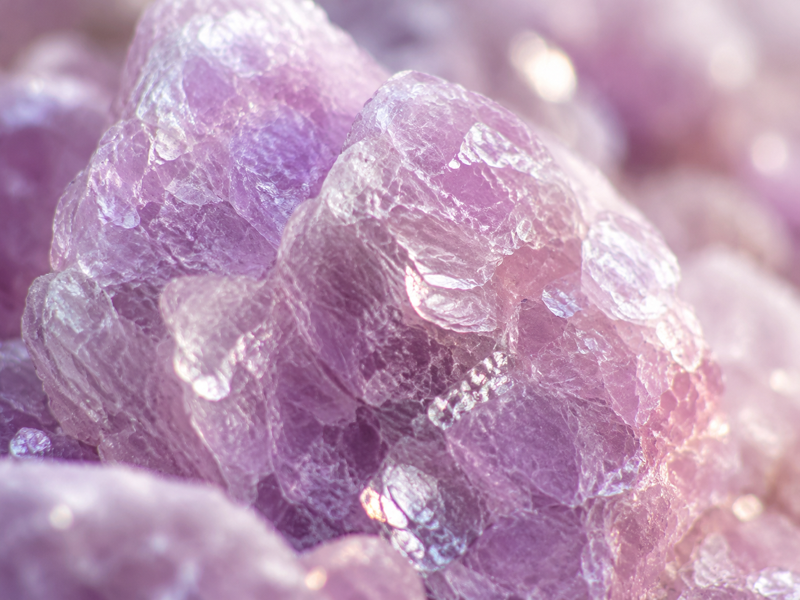
What It Looks Like
Lepidolite is one of the most visually distinctive crystals, with its soft lilac to purple-pink color and shimmering, flaky texture. It belongs to the mica family, which means it naturally forms in thin, layered sheets that seem to catch and scatter light. When you hold a piece of lepidolite, it has a slightly sparkly, almost magical quality. Some specimens contain tiny crystals of pink tourmaline embedded within them, creating a beautiful combination of energies.
Why It Helps with Anxiety
Here's where lepidolite gets really interesting: it naturally contains lithium. Yes, the same lithium that's used in psychiatric medications for mood stabilization. While the amount of lithium in a crystal is nowhere near therapeutic levels (please don't try to replace your medication with a rock!), the symbolic and energetic connection to emotional balance is potent.
Lepidolite helps with anxiety because:
- It's associated with deep emotional healing. Lepidolite is believed to work on the root causes of anxiety — the old patterns, the suppressed emotions, the habitual stress responses.
- It promotes balance. If your anxiety manifests as mood swings, emotional volatility, or feeling like you're on a roller coaster you can't get off, lepidolite is associated with restoring equilibrium.
- It supports transition. Anxiety often spikes during life changes — new jobs, moves, relationship shifts, health challenges. Lepidolite is known as a stone of transition, helping to smooth the rough edges of change.
- It encourages independence from anxiety. Rather than just soothing anxious feelings, lepidolite is said to help you develop new patterns and release the addiction to worry.
How to Use Lepidolite for Anxiety
For Emotional Balance:
Carry a small piece of lepidolite in your pocket throughout the day. When you feel your mood starting to shift toward anxiety, hold it in your hand and take three slow breaths. Let the stone remind you that emotions are waves — they rise, they peak, they pass. You don't have to be swept away by them.
For Transition Support:
During times of significant change, create a lepidolite ritual. Each morning, hold the stone and set an intention: "I welcome this change. I trust the process. I am safe." Each evening, hold it again and acknowledge one thing that went well that day. This simple practice can reframe transition from threat to opportunity.
For Deep Healing Work:
Use lepidolite during journaling sessions about anxiety. Hold it in your non-dominant hand while you write, allowing it to serve as a grounding presence while you explore the roots of your worry. The stone's calming energy can make it feel safer to go deeper into emotional territory.
For Sleep and Dream Work:
Place lepidolite under your pillow to promote restful sleep and reduce anxiety dreams. Some people find it helps them wake feeling more emotionally balanced and less triggered by nighttime worries.
When to Reach for Lepidolite
- When your mood is volatile or swinging rapidly
- During life transitions and changes
- When you want to address the root causes of anxiety
- When anxiety is accompanied by depression
- During emotional healing work
- When you need support releasing old patterns
Blue Lace Agate: The Stone of Gentle Communication
What It Looks Like
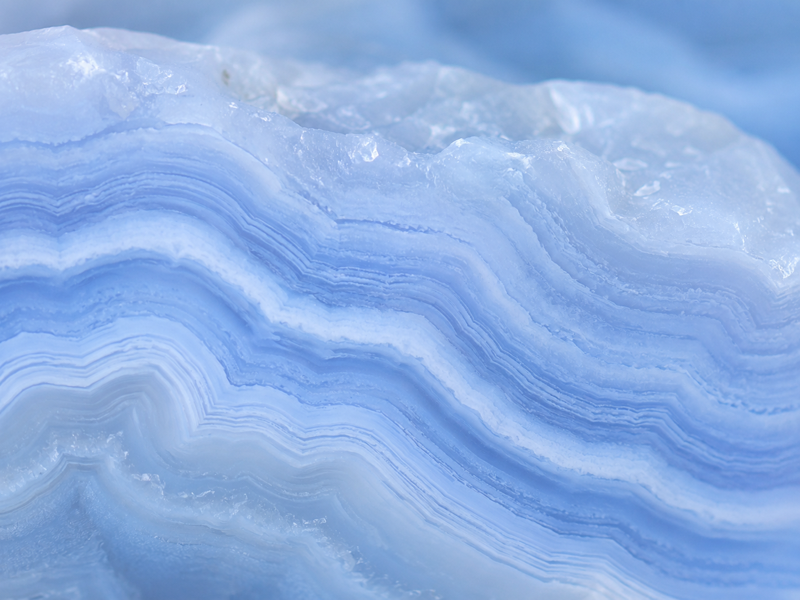
Blue lace agate is breathtakingly beautiful. It features delicate, swirling bands of light blue and white that look like frozen waves, wispy clouds, or fine lace (hence the name). Each piece is unique, with its own pattern of flowing lines. The stone has a soft, milky translucence and a smooth, cool feel when polished. Looking at blue lace agate is calming in itself — its patterns seem to whisper "slow down" to the observer.
Why It Helps with Anxiety
Blue lace agate is one of the best stones for social anxiety and anxiety related to communication. If your anxiety spikes before public speaking, during confrontations, or in any situation where you need to express yourself, this is your stone.
Blue lace agate helps with anxiety because:
- It calms the fear of speaking. Many anxious people know exactly what they want to say but feel paralyzed by fear. Blue lace agate is associated with the throat chakra and is believed to support clear, calm communication.
- It soothes social anxiety. The gentle, flowing energy of this stone can help you feel more at ease in social situations, reducing the sense of being judged or scrutinized.
- It promotes inner calm that shows outwardly. When you're calm inside, it shows in your body language, your voice, and your presence. Blue lace agate supports that inner stillness.
- It helps with over-explaining. Some anxious people talk too much when nervous, oversharing or rambling. Blue lace agate is said to promote concise, confident communication.
How to Use Blue Lace Agate for Anxiety
For Public Speaking:
Hold a piece of blue lace agate while preparing for a presentation or speech. Touch it to your throat before speaking. During the event, keep a small piece in your pocket and touch it when you need a confidence boost. The cool, smooth texture can become an anchor that keeps you grounded while speaking.
For Difficult Conversations:
Before a conversation that makes you anxious (a confrontation, a boundary-setting talk, an emotional discussion), hold blue lace agate and practice what you want to say. The stone can help you find words that are honest but kind, firm but compassionate.
For Social Anxiety in Groups:
Wear a blue lace agate necklace so the stone rests near your throat. When you feel social anxiety rising, touch the stone and take a breath. Remind yourself that you don't have to perform or impress anyone. You can simply be present.
For Calming the Mind:
When anxious thoughts are swirling, gaze at a piece of blue lace agate. Follow the flowing lines with your eyes, letting them guide your mind into a calmer state. This simple visual meditation can be surprisingly effective.
When to Reach for Blue Lace Agate
- Before public speaking or presentations
- Before difficult conversations
- When attending social events that trigger anxiety
- When you need to express yourself clearly
- When anxiety affects your voice or throat (tightness, lump in throat)
- When you're worried about being judged by others
Clear Quartz: The Master Amplifier
What It Looks Like
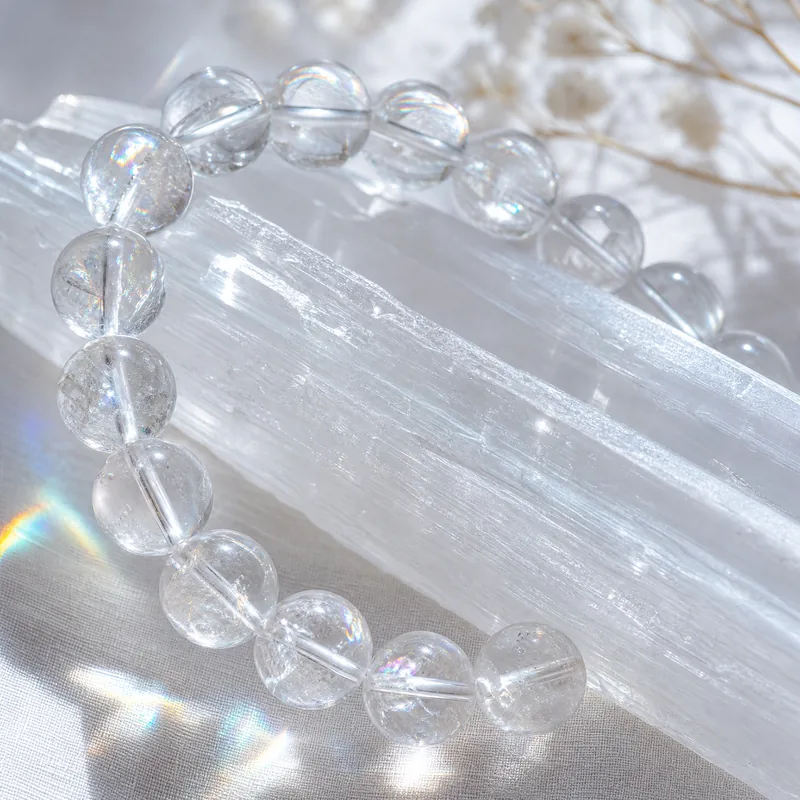
Clear quartz lives up to its name — it's a transparent, glass-like crystal that allows light to pass through it cleanly. High-quality clear quartz is like frozen water, perfectly clear with a brilliant sparkle. Lower-grade pieces may be cloudy or contain interesting internal features like rainbows, veils, or tiny fractures that catch the light. Raw clear quartz forms in pointed hexagonal prisms, while polished pieces are smooth and cool to the touch.
Why It Helps with Anxiety
Clear quartz is often called the "master healer" or "master amplifier" in the crystal world. While it's not specifically an "anxiety stone" in the same way as amethyst or lepidolite, its versatility makes it an invaluable part of any anxiety-relief toolkit.
Clear quartz helps with anxiety because:
- It amplifies other crystals' energies. When paired with any of the anxiety-relief stones in this chapter, clear quartz is believed to enhance their effects. Think of it as a booster for your crystal practice.
- It brings clarity. Anxiety thrives on confusion, overwhelm, and mental fog. Clear quartz is associated with mental clarity and focus, helping you see through the haze of worry.
- It purifies and cleanses. Clear quartz is believed to absorb and transmute negative energy. When anxiety has you feeling heavy or burdened, clear quartz can help you feel lighter and clearer.
- It programs intentions beautifully. Many crystal practitioners believe clear quartz can be "programmed" with a specific intention — like calm, peace, or anxiety relief — and will hold that energy for you.
How to Use Clear Quartz for Anxiety
As an Amplifier:
Create a crystal grid for anxiety relief by placing clear quartz in the center and surrounding it with other calming stones (amethyst, rose quartz, lepidolite). The clear quartz amplifies the combined energy of the group. Even if you don't believe in crystal grids, the act of creating one is meditative and intentional.
For Mental Clarity:
When anxiety has you confused or overwhelmed, hold a clear quartz point in your dominant hand. Close your eyes and imagine the crystal pulling the mental fog out of your mind, leaving behind clear, calm thinking. This visualization can be remarkably effective at creating psychological distance from anxious thoughts.
For Intention Setting:
Hold a piece of clear quartz and speak your intention aloud: "I am calm. I am safe. I am at peace." Repeat this daily, using the quartz as a tangible anchor for your commitment to managing anxiety. Over time, the stone becomes a trigger for that calm state.
For Cleansing Other Crystals:
Place your anxiety-relief crystals on a bed of clear quartz overnight to cleanse and recharge them. This ensures your tools are always at their best when you need them.
For Water Elixirs:
Create a gem water elixir by placing a clean clear quartz in a glass of water (make sure the stone is non-toxic and clean) and letting it sit in sunlight for a few hours. Drink the water throughout the day as a gentle, ongoing infusion of clarifying energy. Note: Never use stones that contain toxic minerals or dissolve in water for elixirs. Clear quartz is generally safe, but always research before making elixirs.
When to Reach for Clear Quartz
- When you want to amplify another crystal's energy
- When you need mental clarity and focus
- When anxiety has you feeling foggy or confused
- When setting intentions for healing
- When you want to cleanse and recharge other crystals
- When you need an all-purpose anxiety support stone
Combining Your Crystal Allies
While each crystal can work beautifully on its own, combining them strategically can create powerful synergies. Here are some recommended combinations:
For General Daily Anxiety: Amethyst + Rose Quartz This combination addresses both the mental and emotional aspects of anxiety — amethyst calms the mind while rose quartz soothes the heart.
For Social Anxiety: Blue Lace Agate + Black Tourmaline Blue lace agate supports confident communication while black tourmaline protects you from absorbing other people's nervous energy.
For Anxiety with Depression: Lepidolite + Rose Quartz Lepidolite addresses the depressive component and emotional volatility, while rose quartz adds the crucial element of self-love and compassion.
For Panic Attacks: Black Tourmaline + Amethyst Black tourmaline grounds you firmly in your body while amethyst calms the racing mind. Hold both during a panic attack, focusing on the black tourmaline first (grounding) and then the amethyst (calming).
For Sleep Anxiety: Amethyst + Lepidolite Place both under your pillow or on your nightstand. Amethyst quiets mental chatter while lepidolite promotes deep emotional peace.
Experiment with combinations and notice how different pairings feel to you. Trust your intuition — if a combination feels right, it probably is.
Crystal Bracelets for Daily Anxiety Relief
Why Bracelets Work Beautifully for Anxiety
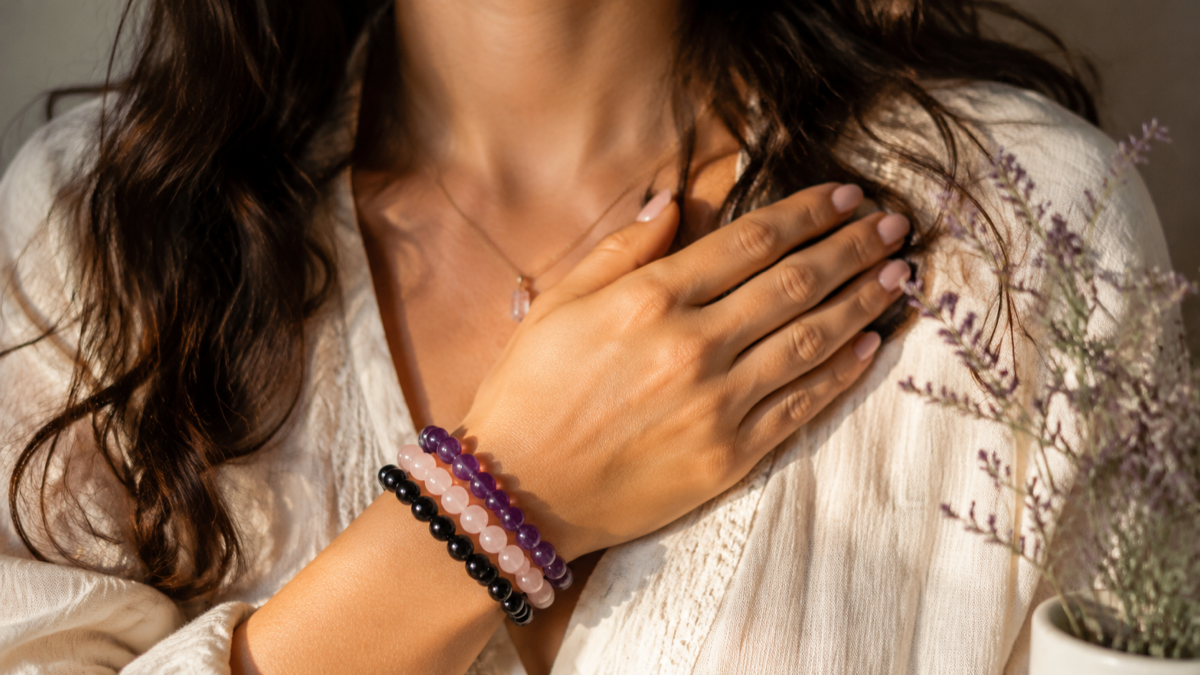
Of all the ways to work with crystals for anxiety, bracelets hold a special place. There's something uniquely powerful about having your healing tools wrapped around your wrist, always within reach, always present as a gentle reminder.
Crystal bracelets work so well for anxiety for several reasons:
They're always accessible. Unlike a stone in your pocket (which you might forget about) or a crystal on your nightstand (which only helps at home), a bracelet is right there on your wrist. You can touch it, roll the beads between your fingers, or simply glance at it anytime, anywhere.
They work with acupressure points. The wrist contains several acupressure points associated with calm and emotional balance. The gentle pressure of crystal beads against these points may provide subtle, ongoing support throughout the day.
They're discreet. If you work in a professional environment or prefer to keep your wellness practices private, a crystal bracelet just looks like jewelry. No one needs to know it's also your anxiety support tool unless you choose to tell them.
They provide continuous grounding. The weight of beads on your wrist creates a constant, subtle sensory input that can keep you more anchored in your body throughout the day — especially helpful if you tend to dissociate or get lost in anxious thoughts.
They become a habit trigger. Over time, touching your crystal bracelet becomes an automatic response to anxiety. The bracelet itself cues your brain to breathe, to pause, to return to the present moment.
Choosing Your Anxiety Relief Bracelet
When selecting a crystal bracelet for anxiety, consider these factors:
Crystal Selection:
Choose crystals based on your primary anxiety type:
- For general, all-day anxiety: Amethyst, lepidolite, or a combination
- For social anxiety: Blue lace agate or rose quartz
- For anxiety triggered by external stress: Black tourmaline
- For emotional, heart-centered anxiety: Rose quartz
- For mental, thought-based anxiety: Amethyst or clear quartz
Many anxiety-relief bracelets combine multiple crystals to address different aspects of worry and stress. A popular combination is amethyst, rose quartz, and black tourmaline — covering mind, heart, and protection.
Bead Size:
Beads typically range from 4mm to 10mm. Smaller beads (4-6mm) are more subtle and comfortable for all-day wear. Larger beads (8-10mm) provide more substantial tactile feedback and make it easier to use the bracelet as a mindfulness tool.
Material Quality:
Look for genuine crystals rather than plastic or glass imitations. Real crystals are cooler to the touch, have natural variations in color and texture, and carry that grounding weight that makes them effective anxiety tools. If you're unsure about a seller, read reviews and ask questions.
Comfort and Fit:
Your bracelet should be comfortable enough to wear all day. It shouldn't be so tight that it leaves marks or so loose that it slides off. Many crystal bracelets are made with elastic cord for easy on-and-off wear. Others use adjustable cords or clasps.
Your Intention:
Before buying or making a bracelet, set a clear intention. What do you want this bracelet to help you with? Daily calm? Social confidence? Sleep support? Your intention infuses the bracelet with personal meaning, which amplifies its psychological impact.
How to Work with Your Crystal Bracelet
A crystal bracelet is more than jewelry — it's a tool. Here's how to get the most from it:
Morning Intention Setting:
Each morning, before you start your day, take a moment with your bracelet. Hold it in both hands, close your eyes, and set an intention for the day. Something like: "Today, when I feel anxious, I will remember to breathe." or "I carry peace with me wherever I go." This simple ritual takes thirty seconds and primes your mind to use the bracelet as a support throughout the day.
The Touch-and-Breathe Technique:
This is the simplest and most effective bracelet technique. Whenever you feel anxiety rising, touch your bracelet. Roll a bead between your thumb and forefinger. Take one slow, deep breath. That's it. One bead, one breath. This micro-intervention can prevent anxiety from spiraling by interrupting the physiological stress response before it escalates.
The 4-7-8 Bracelet Practice:
For more intense anxiety moments, use your bracelet to time the 4-7-8 breathing technique. Touch the first bead and breathe in for 4 counts. Move to the next bead and hold your breath for 7 counts. Touch the third bead and exhale for 8 counts. Repeat this pattern, moving bead by bead, for one to three minutes. This extended exhale activates your parasympathetic nervous system — your body's natural relaxation response.
Desk Work Grounding:
If you work at a computer, rest your crystal-braceleted wrist on the desk while you type. The subtle contact between the crystals and the surface creates gentle pressure and awareness. Periodically pause to roll the beads and take a conscious breath.
Transition Rituals:
Use your bracelet to mark transitions throughout the day — leaving home, arriving at work, starting lunch, ending the workday, arriving home. Touch the bracelet at each transition and take one intentional breath. These micro-rituals create structure and predictability, which anxious nervous systems crave.
Evening Gratitude Practice:
Before bed, hold your bracelet and recall three things that went well that day. Touch one bead for each positive moment. This trains your brain to notice the good alongside the anxiety, creating a more balanced perspective over time.
Making Your Own Crystal Anxiety Bracelet
Creating your own bracelet adds another layer of personalization and intention. Here's how:
Materials Needed:
- Crystal beads of your choice (8mm is a good beginner size)
- Elastic cord (0.8mm or 1mm thickness)
- Scissors
- A bead board or towel to work on
Steps:
- Cleanse your beads first by rinsing them in cool water and letting them dry in sunlight or moonlight.
- Measure your wrist and cut elastic cord about 6 inches longer than your wrist circumference.
- String your beads in a pattern that feels right to you. You might alternate crystals or group like with like.
- As you string each bead, hold an intention in your mind. Infuse the bracelet with your hopes for calm and peace.
- When all beads are strung, tie the elastic in a tight double knot. Pull firmly but don't overstretch.
- Dab a tiny drop of clear nail polish on the knot for extra security (optional).
- Trim excess cord and tuck the knot inside a bead.
- Hold the finished bracelet in both hands, close your eyes, and dedicate it to your well-being.
Making your own bracelet is a meditative practice in itself. The focused attention required to string beads is excellent for anxious minds.
Caring for Your Crystal Bracelet
Crystal bracelets used for anxiety support need regular care:
- Cleanse weekly using any method from Chapter 7 (moonlight, selenite, sound, etc.)
- Rinse after heavy sweating (after workouts, hot days) as salt and oils can dull the crystals
- Remove before swimming or showering to protect the elastic cord
- Store in a safe place when not being worn — many people keep their bracelet on a special dish or in a small bag on their nightstand
- Retire when the cord breaks — some believe a broken bracelet has absorbed its full capacity of energy and done its work
Crystal Meditation for Anxiety
The Power of Crystal-Enhanced Meditation
Meditation is one of the most effective tools for managing anxiety, but it's also one of the most challenging to practice consistently. Many anxious people find traditional meditation frustrating — sitting still with their thoughts feels like being locked in a room with their worst fears.
Crystals can change this. By giving your mind something concrete to focus on, crystals transform meditation from an abstract exercise in thought-watching into a rich, sensory experience. The crystal becomes your anchor, your guide, and your companion in the practice.
Research supports this approach. Studies on focused attention meditation — where practitioners concentrate on a specific object, sound, or sensation — show that it can be particularly effective for anxiety because it gives the mind a job to do. Crystals are perfect objects for this type of meditation.
Preparing for Crystal Meditation
Before you begin, create an environment that supports relaxation:
Choose Your Space:
Find a quiet spot where you won't be disturbed for the duration of your practice. It doesn't need to be a dedicated meditation room — a corner of your bedroom, a comfortable chair, or even your car (parked!) can work.
Gather Your Crystals:
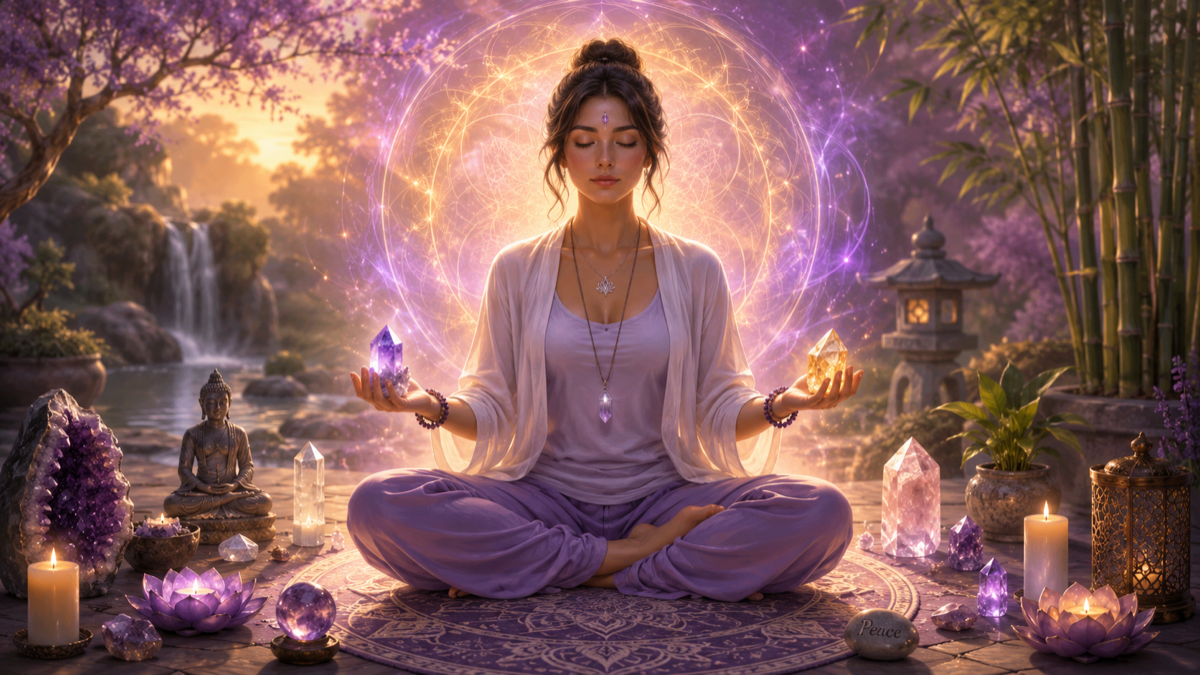
Select one to three crystals based on your intention. For anxiety relief, amethyst, lepidolite, and rose quartz are excellent choices. You might hold one, place one on your heart, and set one nearby.
Set the Atmosphere:
Dim the lights if possible. Light a candle or diffuse calming essential oils (lavender, frankincense, or chamomile) if you enjoy aromatherapy. The goal is to signal to your senses that it's time to relax.
Get Comfortable:
Sit or lie in a position you can maintain without strain. You don't need to sit cross-legged on the floor unless that's comfortable for you. A chair with back support is perfectly fine. The goal is relaxation, not perfect posture.
Set an Intention:
Before you begin, state your intention silently or aloud: "I meditate to find peace." or "This time is for my well-being." This simple act of intention-setting primes your mind and body for the practice.
5-Minute Anxiety Relief Meditation
This short meditation is perfect for beginners, for busy days, or for moments when anxiety spikes and you need immediate relief.
What You'll Need:
- One calming crystal (amethyst or lepidolite work well)
- A comfortable seated position
- Five uninterrupted minutes
The Practice:
- Settle (30 seconds): Close your eyes and take three deep breaths. Inhale through your nose for four counts, hold for two, exhale through your mouth for six. Let your body begin to soften.
- Connect (30 seconds): Hold your crystal in both hands. Feel its weight, its temperature, its texture. Notice every detail — is it smooth? Cool? Does it have ridges or imperfections? Let your full attention rest on the physical sensation of the crystal in your hands.
- Breathe with the Crystal (2 minutes): Continue breathing slowly. On each inhale, imagine you're drawing in calm, peaceful energy from the crystal. On each exhale, imagine releasing tension, worry, and anxiety. You don't need to visualize anything complex — simply feel the exchange: calm in, tension out.
- Body Scan (1 minute): Keeping the crystal in your left hand, use your right hand to touch different parts of your body — your forehead, your heart, your belly. At each point, pause and breathe. The crystal stays with you as you scan, a constant anchor of peace.
- Closing (30 seconds): Bring both hands back together around the crystal. Take three final deep breaths. Whisper "thank you" — to yourself, to the crystal, to the moment of peace. Open your eyes gently.
When to Use: This meditation is perfect for:
- Morning anxiety upon waking
- Pre-meeting jitters
- Lunch break reset
- Transitioning from work to home
- Anytime you need a quick centering
10-Minute Deep Relaxation Meditation
This longer practice allows for deeper release and is ideal for evenings or whenever you have more time.
What You'll Need:
- Two to three crystals (amethyst for the mind, rose quartz for the heart, black tourmaline for grounding)
- A comfortable lying position
- Ten uninterrupted minutes
The Practice:
- Grounding (2 minutes): Lie on your back with your knees bent or legs extended. Place the black tourmaline on your lower belly or between your feet. Place your hands on your stomach and breathe deeply, feeling the rise and fall. Imagine roots growing from your body down into the earth, anchoring you firmly. The black tourmaline absorbs any scattered, anxious energy.
- Heart Opening (3 minutes): Place the rose quartz on your heart center (middle of your chest). Rest your hands lightly on top of it. Breathe into your heart space. With each inhale, imagine the rose quartz radiating soft pink light, filling your chest with warmth and compassion. With each exhale, release any emotional tension you've been carrying. If tears come, let them. This is healing.
- Mind Calming (3 minutes): Move the amethyst to the space between your eyebrows (your third eye). Rest your hands by your sides. Imagine the amethyst emitting a gentle purple light that soothes your mind. Each anxious thought that arises is like a cloud — watch it drift across the sky of your mind and dissolve. You don't need to push thoughts away. Simply let them pass, returning your attention to the purple light whenever you notice you've drifted.
- Integration (2 minutes): Remove the crystals from your body and hold them all in both hands over your heart. Take five deep breaths, feeling the combined energy of the stones. Imagine a bubble of peaceful, protective light surrounding your entire body. You are safe. You are calm. You are whole.
When to Use: This meditation is ideal for:
- Deeply stressful days
- Sunday evening preparation for the week
- After difficult emotional experiences
- Anytime you need profound restoration
Crystal Meditation for Sleep
Sleep and anxiety have a complicated relationship. Anxiety makes it hard to sleep, and sleep deprivation makes anxiety worse. This meditation is designed to break that cycle.
What You'll Need:
- Amethyst and lepidolite
- Your bed
- Willingness to fall asleep (it's okay if you do!)
The Practice:
- Preparation: Get into bed and dim the lights. Place the lepidolite under your pillow and hold the amethyst in your left hand.
- The Release: Close your eyes and take ten deep breaths. With each exhale, consciously release the day. Let your muscles soften, one by one, starting from your toes and working up to your forehead.
- The Crystal Journey: Hold the amethyst and imagine it's a lighthouse, and your anxious thoughts are ships on a stormy sea. The lighthouse beam sweeps across the water, and each time it touches a ship (a worry), that ship gently dissolves into mist. Continue this visualization, letting the lighthouse calm the sea of your mind.
- Surrender: When you feel drowsy, place the amethyst on your nightstand. Whisper "I surrender to rest." Let the lepidolite under your pillow support you through the night. Drift into sleep.
If You Wake in the Night: Reach for the amethyst on your nightstand. Hold it and take five breaths. Let it guide you back to the lighthouse visualization and back to sleep.
Tips for a Consistent Crystal Meditation Practice
- Start small. Five minutes is enough to begin. Consistency matters more than duration.
- Same time, same place. Try to meditate at the same time each day. Morning works well for setting a calm tone; evening helps process the day's stress.
- Be patient with your mind. Your thoughts will wander. This doesn't mean you're failing — it means you're human. Each time you notice your mind has wandered and return to your crystal, you're strengthening your mindfulness muscle.
- Journal after. Keep a small notebook nearby and jot down one word or sentence about how you feel after meditating. Over time, you'll see patterns and progress.
- Don't judge. Some days meditation will feel profound. Other days it will feel like you're just sitting there thinking for five minutes. Both are valid. Show up anyway.
Creating Your Anxiety Relief Toolkit
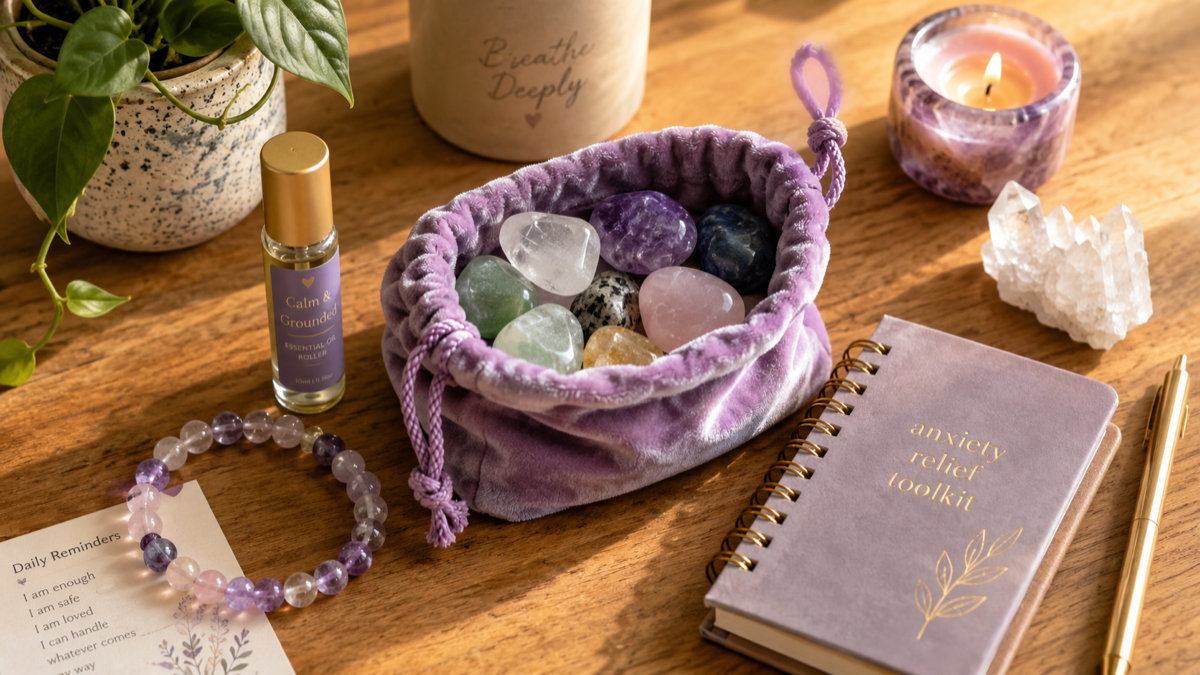
The Concept of a Portable Peace Kit
Imagine this: you're at work, and an email triggers your anxiety. Your heart starts racing, your mind spins, and you feel that familiar tightening in your chest. But instead of spiraling, you reach into your bag, pull out a small pouch, and wrap your fingers around a smooth, cool piece of amethyst. You take three breaths. The wave passes.
This is the power of a well-stocked anxiety relief toolkit — a portable collection of crystals and other comfort items that you can access anytime, anywhere. Having these tools at your fingertips transforms anxiety management from something you think about doing later into something you can do right now, in the moment, when you need it most.
Building Your Core Toolkit
Your anxiety relief toolkit should be portable, personal, and practical. Here's how to build one:
The Container:
Start with a small pouch, box, or bag that brings you pleasure to touch and see. It should be small enough to fit in your everyday bag, your car's center console, or your desk drawer. Natural materials like silk, velvet, or cotton feel luxurious and grounding.
Core Crystals to Include:
Small Tumbled Stones (3-5):
- Amethyst: For calming racing thoughts. Include a small tumbled piece you can hold discreetly.
- Rose Quartz: For self-compassion and emotional soothing. A heart-shaped piece is especially comforting.
- Black Tourmaline: For protection in stressful environments. A raw piece is fine — it doesn't need to be polished.
- Blue Lace Agate: For social anxiety and communication challenges. The visual beauty alone is calming.
- Clear Quartz: For amplifying other stones and providing mental clarity. A small point works well.
A Crystal Bracelet: Include the bracelet you're currently working with, or keep a dedicated "emergency" bracelet in your kit. This ensures you always have crystal support even if you forget to wear your daily bracelet.
Non-Crystal Items to Add:
A truly effective toolkit addresses anxiety through multiple senses:
- Essential oil roller: Lavender, bergamot, or frankincense in a small rollerball. Apply to wrists and inhale deeply.
- Worry stone or palm stone: A smooth, flat stone with a thumb-sized indentation. Rubbing it creates a soothing repetitive motion.
- Small notebook and pen: For quick journaling, brain dumps, or writing down worries to address later.
- Affirmation cards: Write calming affirmations on small cards: "This feeling will pass." "I am safe right now." "I can handle this."
- Earplugs or noise-canceling earbuds: For auditory overwhelm in noisy environments.
- A small photo or token: Something that connects you to a peaceful memory or a loved one.
- Herbal tea bag: Chamomile, passionflower, or lemon balm tea for a soothing warm drink.
Scenario-Based Crystal Selection
Different situations call for different crystal support. Here's a guide:
For the Workday
Primary Crystals: Amethyst, black tourmaline, blue lace agate Setup: Keep black tourmaline on your desk as a protective boundary. Wear an amethyst bracelet for all-day calm. Keep blue lace agate in your pocket for meetings and presentations. Practice: Touch your amethyst bracelet before checking email. Hold blue lace agate during phone calls. Let black tourmaline absorb workplace stress throughout the day.
For Social Events
Primary Crystals: Blue lace agate, rose quartz, black tourmaline Setup: Wear blue lace agate as a necklace near your throat. Carry rose quartz in your pocket for self-compassion. Keep black tourmaline in your bag for energetic protection. Practice: Touch blue lace agate before entering the event. Find a quiet corner to hold rose quartz and take five breaths if you feel overwhelmed. Hold black tourmaline when interacting with people who drain your energy.
For Travel
Primary Crystals: Black tourmaline, amethyst, clear quartz Setup: Place black tourmaline in your carry-on bag for protection. Hold amethyst during takeoff and landing. Keep clear quartz in your hotel room for cleansing the space. Practice: Create a travel ritual — when you unpack, place black tourmaline on the nightstand and clear quartz in a window. This simple act makes any hotel room feel more like yours.
For Sleep Support
Primary Crystals: Amethyst, lepidolite Setup: Place both under your pillow or on your nightstand. Add rose quartz if nighttime loneliness is part of your anxiety. Practice: The crystal sleep meditation from Chapter 5. Consistency is key — your brain will begin to associate these crystals with sleep.
For Panic Attack Support
Primary Crystals: Black tourmaline (grounding), amethyst (calming) Technique: Hold black tourmaline in your dominant hand, amethyst in your non-dominant hand. Focus first on the black tourmaline — feel its weight, its solidity, its connection to the earth. Once you feel slightly more grounded, shift attention to the amethyst and practice slow breathing. Name five things you can see, four things you can touch, three things you can hear, two things you can smell, one thing you can taste — using the crystals as one of your touch points.
For Morning Anxiety
Primary Crystals: Clear quartz, amethyst Setup: Keep these on your nightstand. Before you even get out of bed, reach for them. Practice: The 5-minute morning anxiety meditation from Chapter 5. Set your intention for the day while holding the crystals. Let them be the first thing that touches your consciousness before your phone's notifications do.
A Story: Sarah's Toolkit Evolution
Sarah came to crystal healing after years of managing anxiety through therapy and medication alone. While those tools helped, she still felt unprepared for the moments when anxiety struck out of nowhere — in line at the grocery store, during a meeting, in the middle of the night.
She started with one piece of amethyst in her pocket. When she felt her anxiety rise at work, she'd reach for it and take three breaths. It wasn't a cure, but it was something — a moment of pause, a small act of self-care.
Over time, her toolkit grew. She added a rose quartz bracelet for self-compassion, a worry stone for her commutes, and black tourmaline for her desk. She created a small ritual of cleansing and reorganizing her toolkit every Sunday evening, which became a comforting transition into the week.
"My toolkit doesn't eliminate my anxiety," Sarah says now. "But it eliminates the helplessness. I always have something I can do, something I can hold, something that reminds me I'm taking care of myself. That makes all the difference."
Keeping Your Toolkit Fresh
Anxiety toolkits work best when they're alive and evolving:
- Rotate your crystals. If you notice you're reaching for the same stone every time, challenge yourself to work with a different one. Each crystal offers different lessons.
- Cleanse regularly. Your toolkit absorbs a lot of energy. Cleanse it weekly using methods from Chapter 7.
- Reassess periodically. Every month, empty your toolkit and consider what's working and what isn't. Remove items you never use; add new ones that call to you.
- Keep it personal. Your toolkit should reflect your anxiety patterns and your preferences. There's no right or wrong combination.
- Have multiple kits. Consider creating a small kit for your car, one for your desk at work, and one for your bag. The more accessible your tools, the more likely you are to use them.
Crystal Care for Emotional Support
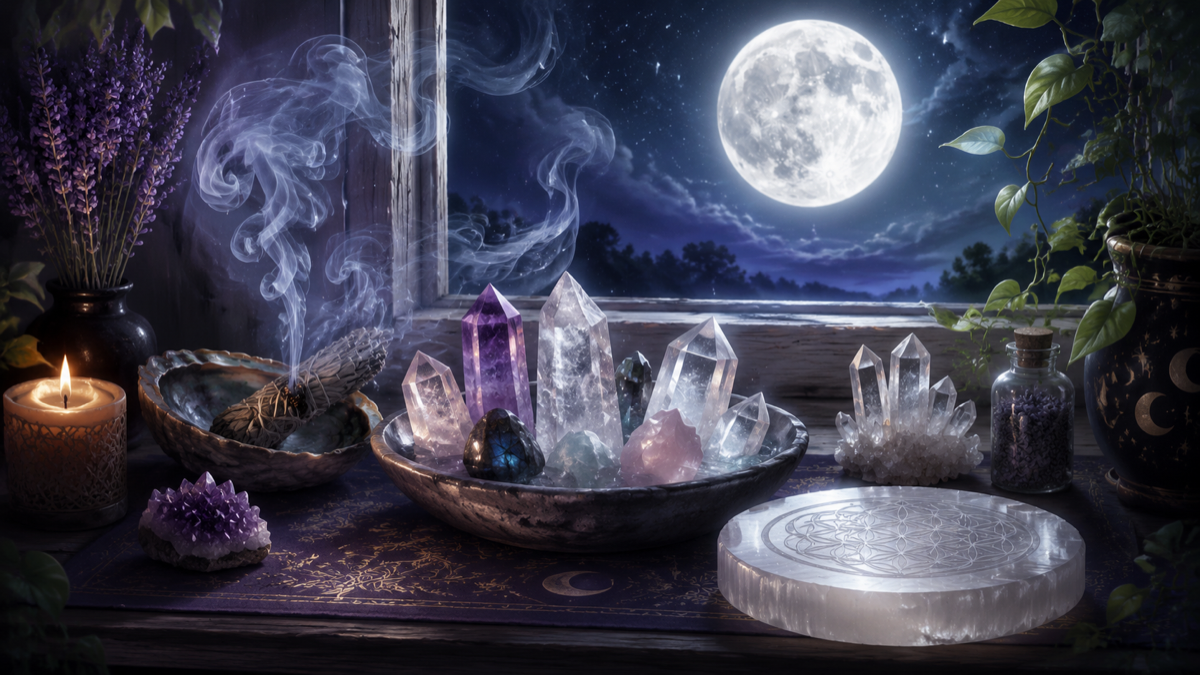
Why Emotional Support Crystals Need Extra Care
Crystals used for anxiety relief work hard. They absorb the energy of your worries, they witness your difficult moments, and they hold space for your healing. Just as you need rest and self-care, your crystals need regular cleansing and recharging to maintain their supportive properties.
Think of it this way: you wouldn't wear the same outfit every day without washing it. You wouldn't eat off the same plate without cleaning it. Crystals that are used for emotional support accumulate energetic residue over time and need the same kind of regular care.
How to Know When Your Crystal Needs Cleansing
Your crystals will often tell you when they need care:
- They feel different: Heavier, warmer, or somehow "off" compared to when you first got them
- They're less effective: You notice you're not feeling the same sense of calm when you use them
- They look dull: The luster seems diminished, or they appear cloudier than usual
- You've been through intense emotions: After panic attacks, grief, or prolonged periods of high stress, your crystals definitely need cleansing
- It's been a while: If you can't remember the last time you cleansed them, it's time
Cleansing Methods for Anxiety Support Crystals
Here are the most effective and practical methods for keeping your crystals clear and vibrant:
Moonlight Bath
Best for: All crystals, especially amethyst, lepidolite, and rose quartz How: Place your crystals on a windowsill or outside where they can absorb moonlight. The full moon is traditionally considered most powerful, but any moonlight works. Leave them overnight. Why it works: Moonlight is gentle, feminine energy that soothes and recharges. It's especially appropriate for emotional healing crystals. Tips: If you live in a city with bright lights, your windowsill still receives moonlight even if you can't see it clearly. Trust the process.
Sunlight Charging
Best for: Clear quartz, black tourmaline, blue lace agate Avoid with: Amethyst (can fade), rose quartz (can fade with prolonged exposure) How: Place crystals in direct morning sunlight for 1-2 hours. Morning sun is gentler than afternoon sun. Why it works: Solar energy is active, masculine, and energizing. It fills crystals with vitality and brightness. Tips: Never leave crystals in direct sun for more than a few hours. Some stones can fade or even crack with excessive heat.
Selenite Plate or Bowl
Best for: All crystals, especially convenient for daily cleansing How: Place your crystals on a selenite plate or in a selenite bowl overnight. Selenite is self-cleansing and cleanses other crystals. Why it works: Selenite has an extremely high vibration that naturally clears lower vibrations from other stones. It's like a spiritual dishwasher. Tips: Selenite dissolves in water, so keep it dry. A selenite plate is one of the easiest and most effective cleansing tools you can own.
Running Water
Best for: Hard stones like quartz, amethyst, black tourmaline Avoid with: Soft stones (selenite, malachite), stones with water-soluble components (lepidolite should be brief) How: Hold your crystals under cool running water for 1-2 minutes. Natural sources (streams, rain) are ideal, but tap water works too. Why it works: Water is a universal cleanser, washing away stagnant energy along with physical dust. Tips: Be gentle. Don't use hot water, which can crack some crystals. Dry stones thoroughly after cleansing.
Sound Cleansing
Best for: All crystals, especially delicate or water-sensitive stones How: Use a singing bowl, tuning fork, bells, or even clapping hands near your crystals. The sound vibrations break up stagnant energy. Why it works: Sound is vibration, and vibration moves energy. A clear tone can reset a crystal's energetic field. Tips: You don't need expensive instruments. YouTube videos of singing bowls work well. Simply play the sound near your crystals for a few minutes.
Earth Burial
Best for: Black tourmaline, grounding stones How: Bury your crystals in the earth (garden, planter, or even a pot of soil) for 24 hours. Why it works: The earth absorbs and transmutes energy naturally. Burying crystals returns them to their source for deep cleansing. Tips: Mark where you buried them! Wrap delicate stones in a cloth to keep soil from getting into cracks.
Smudging
Best for: All crystals How: Pass your crystals through the smoke of burning sage, palo santo, cedar, or incense. Why it works: Smoke has been used for purification across virtually every culture on earth. It carries away stagnant energy. Tips: Use a feather or your hand to waft smoke over the crystals. Do this outdoors or near an open window so the smoke can carry the energy away.
Setting Intentions for Your Crystals
Cleansing clears your crystals; intention-setting programs them. After cleansing, take a moment to set a clear purpose for each stone.
How to Set an Intention:
- Hold the cleansed crystal in both hands.
- Close your eyes and take three deep breaths.
- State your intention clearly, either silently or aloud. Examples:
- "I program this amethyst to support calm and peaceful sleep."
- "May this rose quartz remind me to be gentle with myself."
- "This black tourmaline protects me from energies that don't serve me."
- Visualize your intention as light filling the crystal. See it glowing with your purpose.
- Thank the crystal for its support.
You can reset intentions anytime — monthly, when your needs change, or whenever you feel called to do so.
Building a Relationship with Your Crystals
The most effective crystal healing happens when you develop a relationship with your stones. This isn't about anthropomorphizing rocks — it's about creating meaningful associations and consistent practices.
Spend Time with Them:
Don't only touch your crystals when you're anxious. Hold them during calm moments too. Let your nervous system associate them with peace, not just distress.
Name Them (Optional):
Some people find it helpful to give their crystals names. This personalizes the relationship and makes the stone feel more like a companion than an object.
Talk to Them:
It might feel silly at first, but speaking to your crystals can be therapeutic. Tell them about your day, your fears, your hopes. The act of verbalizing your experience is valuable, regardless of whether the stone responds.
Take Them with You:
Let your crystals experience your life. Take them on walks, to work, on trips. The more integrated they are into your daily existence, the more powerful their presence becomes.
Journal About Your Experiences:
Keep a crystal journal. Note which stones you used, what techniques you tried, and how you felt before and after. Over time, patterns will emerge that help you refine your practice.
A Story: Marcus and His Amethyst
Marcus bought his first crystal — a small amethyst point — on a whim during a particularly difficult period in his life. He was skeptical but desperate enough to try anything.
At first, he kept it on his nightstand and ignored it. But after a particularly rough night of anxiety, he picked it up and held it. He didn't feel any magical energy, but he noticed something almost as valuable: it gave him something to do with his hands. Something to focus on besides the spinning thoughts.
He started carrying it in his pocket. He found himself reaching for it during stressful meetings, while waiting in traffic, in the moments before sleep. It became a trigger — not for anxiety, but for a breath, a pause, a moment of self-awareness.
"I don't know if the amethyst has special powers," Marcus says. "But I know it has my power — the power I've given it through months of association and ritual. When I touch it now, my body remembers to calm down. That's not magic. That's neuroscience. And it's enough."
Combining Crystals with Other Practices
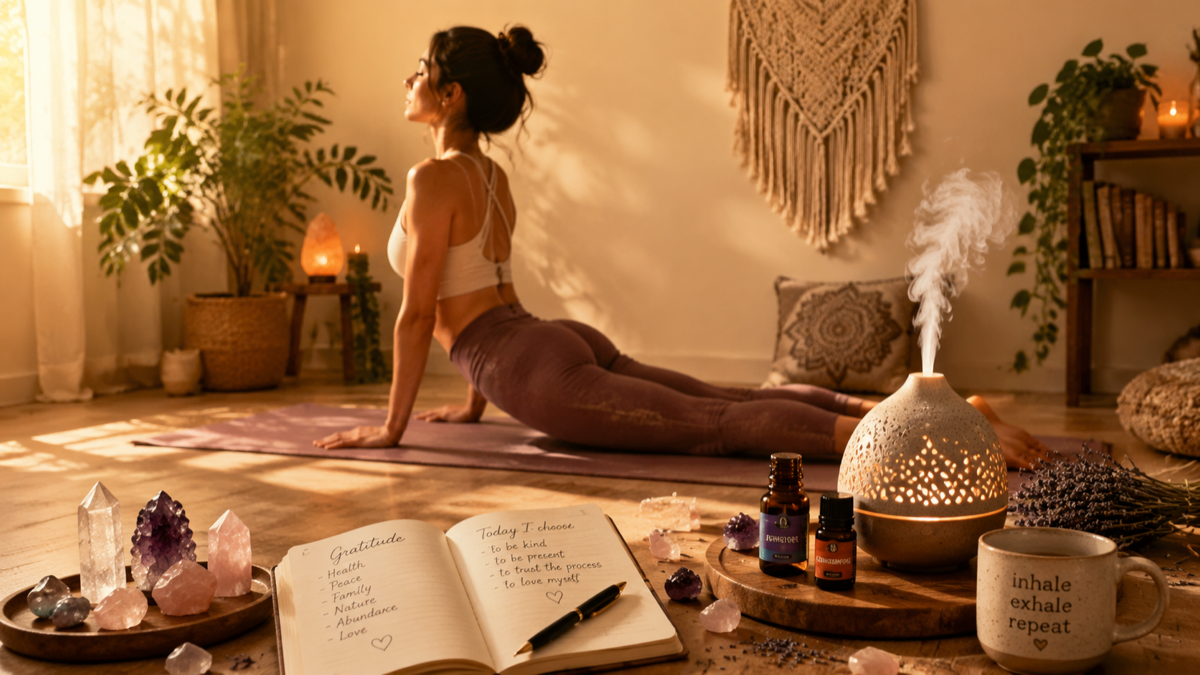
The Synergy of Multiple Approaches
Crystal healing doesn't exist in a vacuum. Its power multiplies when combined with other evidence-based practices for anxiety management. This chapter explores how to integrate crystals into a holistic wellness routine that addresses anxiety from multiple angles.
Think of each practice as a different instrument in an orchestra. Individually, each can make beautiful music. Together, they create something far more powerful and nuanced than any single instrument could achieve.
Crystal + Deep Breathing
Deep breathing is the single most accessible anxiety management tool available to you. It's free, it's always available, and it works by directly activating your parasympathetic nervous system — the "rest and digest" mode that counteracts anxiety's "fight or flight" response.
Adding crystals to your breathing practice gives your hands and mind something to focus on, making the practice more engaging and more likely to stick.
The Crystal Breathing Technique:
- Sit comfortably and hold a calming crystal (amethyst or lepidolite) in both hands.
- Inhale deeply through your nose for 4 counts, feeling the crystal's coolness.
- Hold your breath gently for 4 counts, noticing the weight of the stone.
- Exhale slowly through your mouth for 6 counts, imagining worry leaving your body.
- Repeat for 5-10 cycles, using the crystal as your anchor.
Advanced Practice — The Crystal Breath Count:
Hold a bracelet or a string of mala beads made from calming crystals. Move one bead per breath, using the tactile motion to keep your mind focused. This combines the benefits of breathwork, tactile grounding, and crystal energy.
Crystal + Yoga
Yoga is one of the most well-researched practices for anxiety relief. It combines movement, breath, mindfulness, and physical release — all of which help regulate the nervous system.
Crystals can enhance your yoga practice in several ways:
Placement During Practice:
Place crystals around your yoga mat to create a supportive energy field:
- Black tourmaline at the top of your mat for grounding
- Amethyst at the sides for calm
- Rose quartz near your heart for self-compassion
- Clear quartz at the bottom of the mat to amplify the others
Holding During Meditation:
During Savasana (final relaxation pose), place amethyst on your third eye and rose quartz on your heart. This is one of the most deeply relaxing crystal experiences you can have.
Setting Intentions:
Begin your practice by holding a crystal and setting an intention. "I practice to find peace." Let the crystal rest on your mat during the session as a visual reminder of that intention.
Chakra Alignment:
If you work with chakras, place corresponding crystals on each chakra during a restorative yoga practice:
- Root (base of spine): Black tourmaline
- Sacral (lower belly): Carnelian or orange calcite
- Solar Plexus (upper belly): Citrine or yellow jasper
- Heart (center of chest): Rose quartz
- Throat (throat): Blue lace agate
- Third Eye (between eyebrows): Amethyst
- Crown (top of head): Clear quartz or selenite
Crystal + Journaling
Journaling is a powerful anxiety management tool because it externalizes your worries. When anxious thoughts live inside your head, they can spiral endlessly. When you write them down, they become concrete, manageable, and often much smaller than they seemed.
Crystals can deepen your journaling practice:
The Crystal Prompt Practice:
Before you begin journaling, hold a crystal and ask it a question. Then free-write whatever comes up. Questions might include:
- "What am I really afraid of right now?"
- "What would I say to a friend who felt this way?"
- "What do I need to hear today?"
- "What would peace feel like in this situation?"
Holding While Writing:
Hold a grounding crystal (black tourmaline or hematite) in your non-writing hand while you journal. This provides tactile grounding that keeps you present as you process difficult emotions.
Crystal Gratitude Practice:
End each journaling session by listing three things you're grateful for, touching a different crystal for each one. This ensures you close the practice on a positive note rather than ruminating in anxiety.
Crystal-Infused Journaling Prompts:
- Hold rose quartz and write a love letter to yourself
- Hold amethyst and write about your ideal peaceful day
- Hold black tourmaline and write about what you're ready to release
- Hold blue lace agate and write about a conversation you need to have
- Hold lepidolite and write about a change you're navigating
Crystal + Aromatherapy
Aromatherapy works through the olfactory system — your sense of smell — which has a direct pathway to the limbic system, the part of your brain that processes emotions and memories. Certain essential oils are scientifically proven to reduce anxiety:
Lavender: The most researched essential oil for anxiety. Studies show it can reduce cortisol levels and promote calm. Bergamot: Uplifting and calming, shown to reduce anxiety in clinical studies. Frankincense: Grounding and centering, supports deep breathing. Chamomile: Gentle and soothing, excellent for sleep anxiety. Ylang Ylang: Floral and calming, reduces blood pressure and heart rate.
Combining with Crystals:
- Diffuser + Crystal Grid: Create a crystal grid around your essential oil diffuser. As the oils fill the room, the crystals amplify the calming atmosphere.
- Anointing Crystals: Place a drop of diluted essential oil on your palm stone or worry stone. The combination of scent and touch is deeply soothing.
- Crystal + Oil Bracelet: Lava stone bracelets can absorb essential oils. Add a drop of lavender to your lava stone bracelet and wear it with your crystal bracelet for a multi-sensory experience.
- Bath Ritual: Combine Epsom salts, a few drops of essential oil, and rose quartz or amethyst in the bath. The warm water, soothing scent, and crystal energy create a full-sensory anxiety relief experience.
Crystal + Therapy
Crystal healing and therapy are natural partners. If you're working with a therapist, crystals can support the work you do in sessions:
Between Sessions:
Use crystals to practice the skills you learn in therapy. If your therapist teaches you grounding techniques, practice them with black tourmaline. If you're working on self-compassion, hold rose quartz while you do your homework assignments.
Bringing to Sessions:
Some therapists are open to clients bringing crystals to sessions. A small stone in your pocket can provide comfort during difficult conversations. Always ask your therapist first.
Processing Emotions:
After an intense therapy session, use crystals to help process and integrate what came up. Lepidolite is excellent for this — it supports emotional processing and transition.
Journaling Integration:
Use the crystal journaling techniques above to reflect on your therapy sessions and track your progress.
Building Your Daily Crystal Ritual
The true power of crystal healing for anxiety lies not in any single practice, but in the consistent, daily rituals that create a foundation of calm. Here's a sample daily structure:
Morning (5 minutes):
- Wake and reach for your amethyst
- Practice the 5-minute crystal meditation from Chapter 5
- Set an intention while holding clear quartz
- Put on your crystal bracelet with conscious awareness
Throughout the Day:
- Touch your bracelet whenever you need a grounding moment
- Keep black tourmaline on your desk for protection
- Hold blue lace agate before important communications
- Use your crystal toolkit for midday resets
Evening (10 minutes):
- Remove your bracelet mindfully, thanking it for its support
- Practice the 10-minute deep relaxation meditation
- Journal with your crystals about the day
- Place amethyst and lepidolite for sleep support
Weekly:
- Cleanse all your crystals using your preferred method
- Reassess your toolkit and rotate crystals as needed
- Spend extended time with the crystals you feel drawn to
- Review your journal for patterns and progress
Remember: rituals work because of consistency, not complexity. A simple daily practice is infinitely more valuable than an elaborate practice you never do.
Appendix A: Crystal Quick Reference for Anxiety
At-a-Glance Guide
| Crystal | Color | Primary Anxiety Use | Chakra | Best Form |
|---|---|---|---|---|
| Amethyst | Purple | Racing thoughts, sleep, mental clarity | Crown, Third Eye | Tumbled stone, bracelet, cluster |
| Rose Quartz | Pink | Self-compassion, emotional soothing, heart healing | Heart | Tumbled stone, heart shape, bracelet |
| Black Tourmaline | Black | Protection, grounding, external stress | Root | Raw piece, tumbled, palm stone |
| Lepidolite | Lilac | Emotional balance, transitions, deep healing | Heart, Third Eye | Tumbled stone, under pillow |
| Blue Lace Agate | Light blue | Social anxiety, communication, confidence | Throat | Tumbled stone, necklace, bracelet |
| Clear Quartz | Clear | Amplification, clarity, intention setting | All | Point, tumbled, cluster |
By Anxiety Type
Generalized Anxiety (Constant Worry):
- Primary: Amethyst, Lepidolite
- Support: Clear Quartz
Social Anxiety:
- Primary: Blue Lace Agate, Rose Quartz
- Support: Black Tourmaline (for protection)
Panic Attacks:
- Primary: Black Tourmaline (grounding), Amethyst (calming)
- Support: Clear Quartz
Sleep Anxiety/Insomnia:
- Primary: Amethyst, Lepidolite
- Support: Rose Quartz (for self-compassion about sleep struggles)
Workplace Anxiety:
- Primary: Black Tourmaline, Blue Lace Agate
- Support: Clear Quartz (for mental clarity)
Relationship Anxiety:
- Primary: Rose Quartz, Blue Lace Agate
- Support: Amethyst (for calm perspective)
Health Anxiety:
- Primary: Amethyst (mental clarity), Clear Quartz
- Support: Lepidolite (emotional balance)
By Crystal Property
Most Grounding: Black Tourmaline Most Calming: Amethyst Most Heart-Opening: Rose Quartz Best for Communication: Blue Lace Agate Best for Deep Emotional Work: Lepidolite Most Versatile: Clear Quartz Best for Sleep: Amethyst + Lepidolite Best for Daily Wear: Amethyst bracelet Best for Panic: Black Tourmaline Best for Self-Love: Rose Quartz
Appendix B: 5-Minute Anxiety Relief Rituals
Ritual 1: The Crystal Grounding Reset
Best for: Sudden anxiety, feeling scattered, before important events Time: 5 minutes Materials: Black tourmaline or any grounding crystal
- Stand with feet hip-width apart, holding the crystal in both hands at your heart.
- Close your eyes. Feel the weight of the crystal.
- Take 5 deep breaths. With each exhale, imagine roots growing from your feet deep into the earth.
- Say silently: "I am here. I am grounded. I am safe."
- Open your eyes. Carry the crystal with you.
Ritual 2: The Worry Release
Best for: Intrusive thoughts, rumination, bedtime Time: 5 minutes Materials: Amethyst, a small bowl of water
- Hold the amethyst and focus on your biggest worry.
- Imagine transferring the worry from your mind into the crystal.
- Place the amethyst in the bowl of water (a few inches from the surface — don't submerge if water-sensitive).
- Say: "I release this worry. I am free."
- Leave the crystal in the water for at least an hour. The water symbolically absorbs and neutralizes the worry.
Ritual 3: The Heart Hug
Best for: Self-criticism, loneliness, emotional overwhelm Time: 5 minutes Materials: Rose quartz
- Lie down and place the rose quartz on your heart.
- Place both hands over the crystal.
- Breathe slowly for 5 minutes, imagining pink light radiating from the stone into your chest.
- Whisper: "May I be kind to myself. May I find peace."
- Rest for another minute before slowly sitting up.
Ritual 4: The Protection Shield
Best for: Entering stressful environments, social anxiety, feeling vulnerable Time: 5 minutes Materials: Black tourmaline
- Stand holding the black tourmaline at your solar plexus (upper belly).
- Close your eyes and take 3 deep breaths.
- Slowly extend your arms, tracing a circle of protection around your entire body with the crystal.
- Imagine a dark, strong shield forming around you.
- Say: "I am protected. Only love and peace may enter my space."
- Carry the tourmaline with you into the situation.
Ritual 5: The Gratitude Shift
Best for: Catastrophic thinking, pessimism, spiraling negativity Time: 5 minutes Materials: Any crystal, journal
- Hold your crystal and take 3 calming breaths.
- Write down 5 things you're grateful for. Touch the crystal after writing each one.
- Write down 3 things that went well today, no matter how small.
- Hold the crystal and read your list aloud.
- Close with: "Even in anxiety, there is goodness. I choose to see it."
Ritual 6: The Crystal Breath Count
Best for: Panic attacks, acute anxiety, when you can't think straight Time: 3-5 minutes Materials: Crystal bracelet or any small crystal
- Hold your crystal or touch your bracelet.
- Breathe in for 4 counts, hold for 4, out for 6.
- With each breath cycle, roll the crystal to a new finger or move to a new bead.
- Continue until you've touched all 5 fingers or completed a full circuit of beads.
- Repeat as needed. The tactile motion keeps you grounded while the breathing calms your nervous system.
Ritual 7: The Sleep Setup
Best for: Nighttime anxiety, insomnia, racing thoughts at bedtime Time: 5 minutes Materials: Amethyst, lepidolite
- Ten minutes before bed, hold both crystals and dim the lights.
- Take 10 slow breaths with the crystals at your heart.
- Place the lepidolite under your pillow and amethyst on your nightstand.
- Say: "I release today. I welcome deep, peaceful rest."
- Lie down and let the crystals support you through the night.
Appendix C: When to Seek Professional Help
A Gentle but Necessary Conversation
This book is about complementary, supportive tools for managing anxiety. But there are times when self-help isn't enough — and recognizing those times is one of the most important acts of self-care you can offer yourself.
Seeking professional help is not a failure. It's not a sign that your crystals aren't working. It's not evidence that you're "too broken" to heal on your own. It is, quite simply, the smart, brave, responsible thing to do when anxiety crosses from manageable to overwhelming.
Signs That It's Time to Reach Out
Please seek professional help if you experience any of the following:
Your anxiety is getting worse despite your efforts.
If you've been using the tools in this book (along with other self-care practices) for several weeks and your anxiety is increasing rather than decreasing, it's time to consult a professional. This doesn't mean crystals have failed — it means you may need additional support.
Anxiety is interfering with daily life.
If anxiety is preventing you from going to work, maintaining relationships, caring for yourself, or engaging in activities you used to enjoy, you need more than self-help tools. A therapist or doctor can offer interventions that address the root causes of your anxiety.
You're having thoughts of self-harm or suicide.
This is an emergency. If you're thinking about hurting yourself or ending your life, please seek help immediately. Call emergency services, go to your nearest emergency room, or contact a crisis helpline. Your life matters. The world needs you here.
You're using substances to cope.
If you find yourself drinking more than usual, using drugs, or relying on prescription medications (yours or someone else's) to manage anxiety, this is a red flag. Self-medication often makes anxiety worse in the long run and can lead to addiction.
Physical symptoms are severe.
Anxiety can cause real physical symptoms — chest pain, heart palpitations, difficulty breathing, digestive issues, chronic muscle tension. While these are often harmless, they can also indicate underlying medical conditions. Always rule out physical causes with a doctor.
You're experiencing panic attacks regularly.
Occasional panic attacks can often be managed with self-help tools. But if you're having panic attacks frequently, or if the fear of having another panic attack is controlling your behavior (avoiding places, situations, or activities), professional treatment can help you break the cycle.
Your anxiety is accompanied by depression.
Anxiety and depression often occur together. If you're also experiencing persistent sadness, loss of interest in activities, changes in appetite or sleep, feelings of hopelessness, or difficulty concentrating, you may be dealing with depression as well as anxiety. This requires professional support.
Trauma is involved.
If your anxiety stems from trauma — abuse, accidents, violence, loss, or any deeply distressing experience — working with a trauma-informed therapist is essential. Trauma doesn't heal through willpower alone, and attempting to process it without support can sometimes make things worse.
Types of Professional Support
Therapists and Counselors:
- Cognitive Behavioral Therapy (CBT): One of the most effective treatments for anxiety. Helps you identify and change thought patterns that fuel anxiety.
- Exposure Therapy: Gradually exposes you to anxiety triggers in a safe, controlled way to reduce fear responses.
- Acceptance and Commitment Therapy (ACT): Teaches you to accept anxious thoughts without letting them control your behavior.
- Dialectical Behavior Therapy (DBT): Combines CBT with mindfulness and emotional regulation skills.
- Somatic Therapies: Focus on the body and nervous system, including EMDR (Eye Movement Desensitization and Reprocessing) and Somatic Experiencing.
Psychiatrists and Medical Doctors:
- Can prescribe anti-anxiety medications if needed
- Can rule out medical causes of anxiety symptoms
- Can monitor your overall health while you manage anxiety
Support Groups:
- Connect you with others who understand what you're going through
- Provide community, validation, and shared coping strategies
- Available both in-person and online
Integrative and Holistic Practitioners:
- Naturopaths, acupuncturists, and functional medicine doctors may offer natural approaches that complement conventional care
- Always inform all your providers about everything you're doing for your anxiety
How to Find Help
If you have health insurance:
Call the number on your insurance card or visit their website to find in-network mental health providers. Many insurance companies now offer telehealth options, which can be more accessible than in-person appointments.
If you don't have insurance:
- Community mental health centers often offer sliding-scale fees based on income.
- Training clinics at universities offer low-cost therapy with graduate students supervised by licensed professionals.
- Online platforms like Open Path Collective connect people with affordable therapy options.
- Some therapists offer pro bono or reduced-fee slots.
Crisis Resources (United States):
- 988 Suicide & Crisis Lifeline: Call or text 988
- Crisis Text Line: Text HOME to 741741
- SAMHSA National Helpline: 1-800-662-4357 (treatment referral)
International Resources:
- Befrienders Worldwide: www.befrienders.org (find helplines by country)
- International Association for Suicide Prevention: www.iasp.info
- Search "mental health helpline [your country]" for local resources
Continuing Your Crystal Practice Alongside Professional Care
Working with a therapist or doctor doesn't mean you have to give up your crystal practice. In fact, the two can work beautifully together:
- Use crystals to support the skills you learn in therapy
- Bring crystals to sessions if your therapist is open to it
- Use crystal rituals to process emotions between sessions
- Let your crystal practice be the daily foundation while therapy addresses deeper patterns
Tell your providers about your crystal practice. A good therapist won't judge you. They may even be interested in how you're using tangible objects to support your emotional regulation. If a provider dismisses or ridicules your practices, that says more about them than about you. You deserve care that respects your whole self.
Final Words on Seeking Help
There is no shame in needing help. None. The strongest, bravest thing you can do is reach out when you're struggling. Crystals are beautiful companions on the journey, but they're not meant to walk the hardest miles alone.
You deserve support. You deserve relief. You deserve to feel at peace in your own mind and body. Whatever combination of tools — crystals, therapy, medication, community, movement, nature — gets you there, use them. Without guilt. Without apology. Without waiting until you're "bad enough" to deserve help.
You're already worthy. You already matter. Help is available, and it's waiting for you whenever you're ready.
A Closing Letter to the Reader
Dear Reader,
If you've made it to this page, you've done something important. You've taken time for yourself. You've explored new tools. You've shown yourself care and curiosity. Whether or not crystals become a central part of your anxiety management, that act of seeking — of reaching for something that might help — is a victory.
Anxiety is hard. It's invisible, it's relentless, and it makes you doubt yourself. But you are stronger than it. You've survived every anxious moment you've ever had, and you'll survive the ones that come in the future. Each breath you take is proof of your resilience.
Carry your crystals if they help. Put them down if they don't. Trust yourself to know what you need. And never, ever hesitate to reach for professional support when you need it. That's not weakness — it's wisdom.
May you find peace, one stone at a time. May you remember, in the hardest moments, that you are not alone. And may you always, always keep reaching for the light.
With warmth and hope,
Your Fellow Traveler
Crystal Healing for Anxiety: A Practical Guide First Edition
May these pages bring you comfort, clarity, and calm.
The information in this book is for educational purposes only and does not constitute medical advice. Always consult with qualified healthcare providers for diagnosis and treatment of anxiety and other mental health conditions.